In short
|
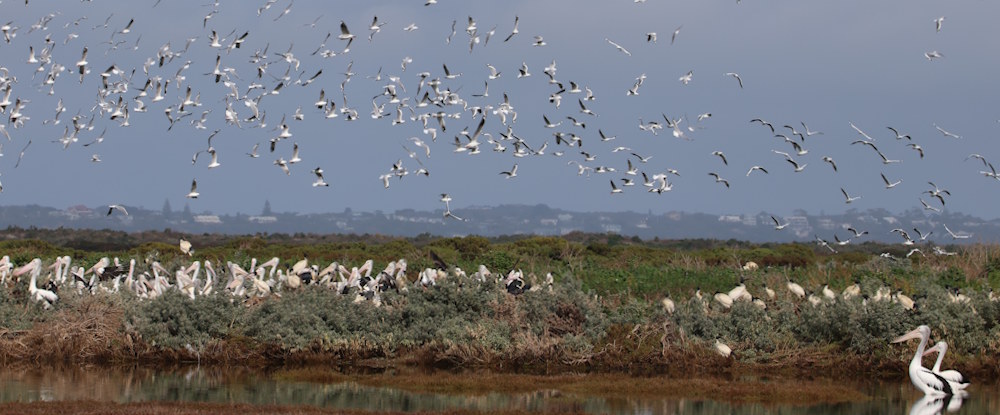
Pelicans and silver gulls on Mud Islands - photo by Renee Douma
A bird’s eye view of Mud Islands
Mud Islands is a large sand bank complex located in the southern area of Port Philip Bay. The island is comprised mostly of sand and shell grit and sparsely populated by saltmarsh and shrubland. The vegetation and environment of the island is dynamic, constantly changing due to erosion and deposition processes from wind and wave action, and sea-level rise.
Mud Islands is an important nesting habitat for colony-breeding waterbirds. The islands are recognised as an internationally significant area under Port Phillip Bay and Bellarine Peninsular RAMSAR Site.
Over the years, there have been significant changes in the sizes and abundance of bird colonies breeding on the island. Previous studies have observed a steady increase of Silver Gull (Chroicocephalus novaehollandiae) abundance and a decline in White-faced Storm-Petrel (Pelagodroma marina) numbers. Other species were also observed to vary in numbers throughout the years. Reliable count data is needed to track these changes and to create robust models. Due to the density of birds, sometimes numbering in the tens of thousands, obtaining reliable count data can be difficult.
What we are doing
ARI is testing different bird survey methods at Mud Islands to develop standard monitoring protocols for long-term monitoring. The methods we develop aim to detect changes in breeding bird numbers over time, gain insight into their foraging locations and identify causes to disturbances and other threatening processes on Mud Islands.
Using AI to analyse drone images
We are collecting aerial images using Unmanned Aerial Vehicles (UAV), commonly known as drones, flown at low altitudes over the island under research and ethics permits. With the use of Artificial Intelligence (AI) we aim to develop a machine learning approach to analyse and estimate the abundance of bird species. This new technology could prove to be equally accurate, but less intrusive and faster than manually counting bird species
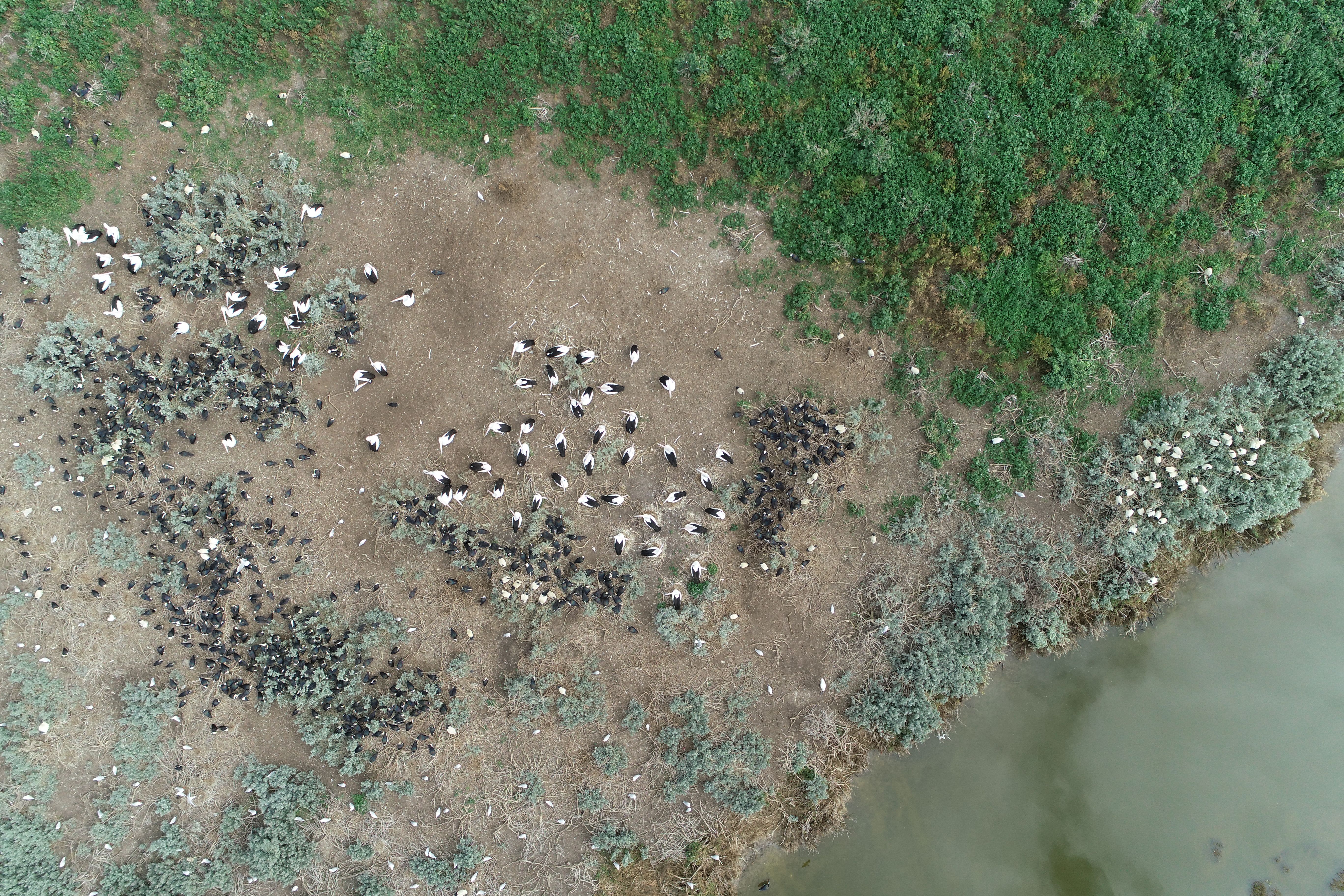
Drone photo of nesting birds - photo by Richard Shelton
Setting camera traps and acoustic recorders for White-faced Storm-Petrel
White-faced Storm-Petrel numbers have been declining in the past decade. We are trialling the use of camera traps and Song Meters in monitoring, by setting them up around the entrance of their burrows. The images and acoustic recordings help us determine if the burrows are occupied and to estimate their abundance.
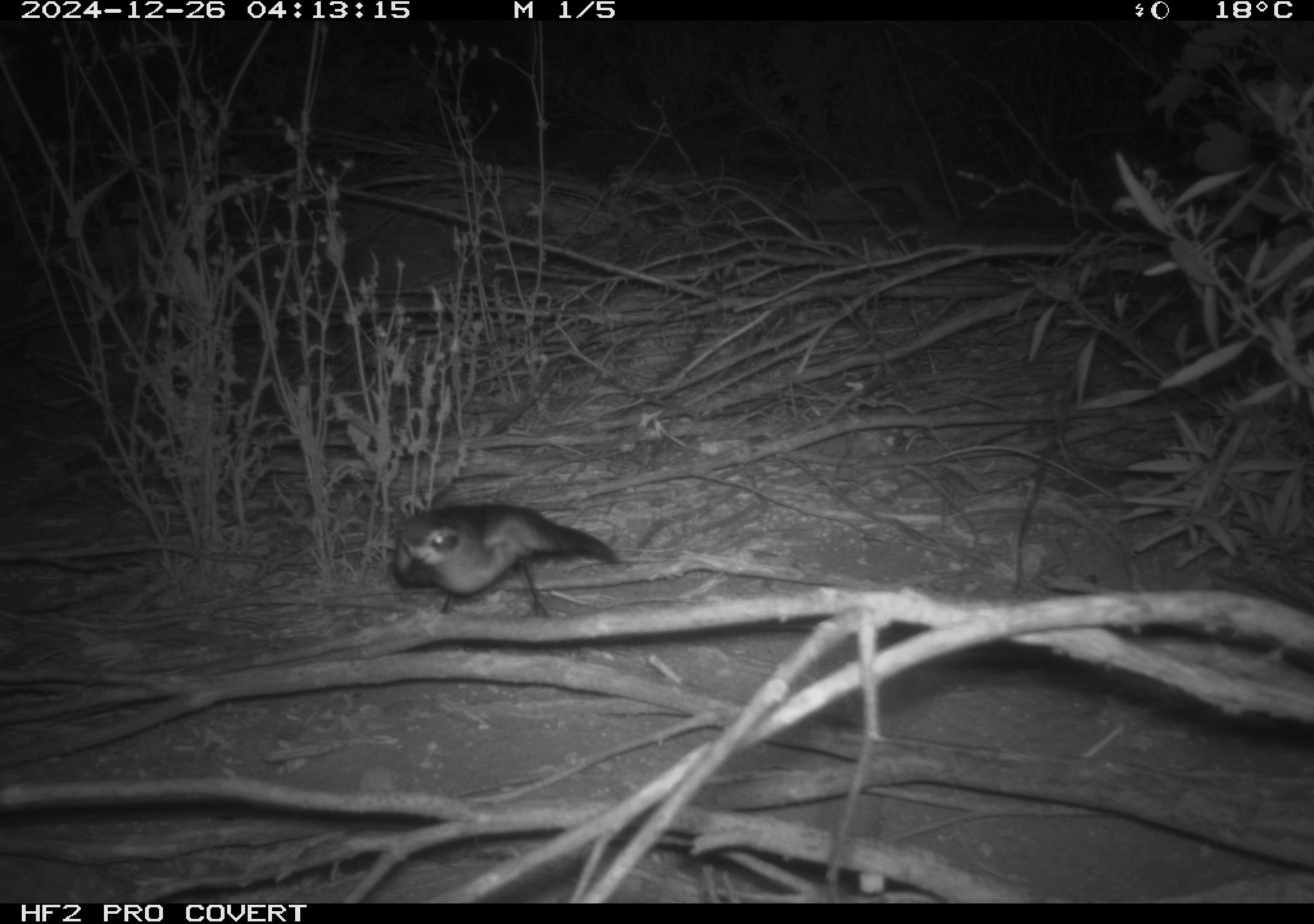
Storm-petrel caught on camera trap (ARI)
Observing bird behaviour in the presence of drone and humans
As part of our drone and camera trap deployment activities, we are collecting observational data on the behaviour of birds around drone and human presence. These observations will indicate if the behaviour of bird changes when a drone is in flight and/or human are on the island. These observations will be important in determining the appropriateness of the survey techniques for the long-term monitoring of Mud Islands.
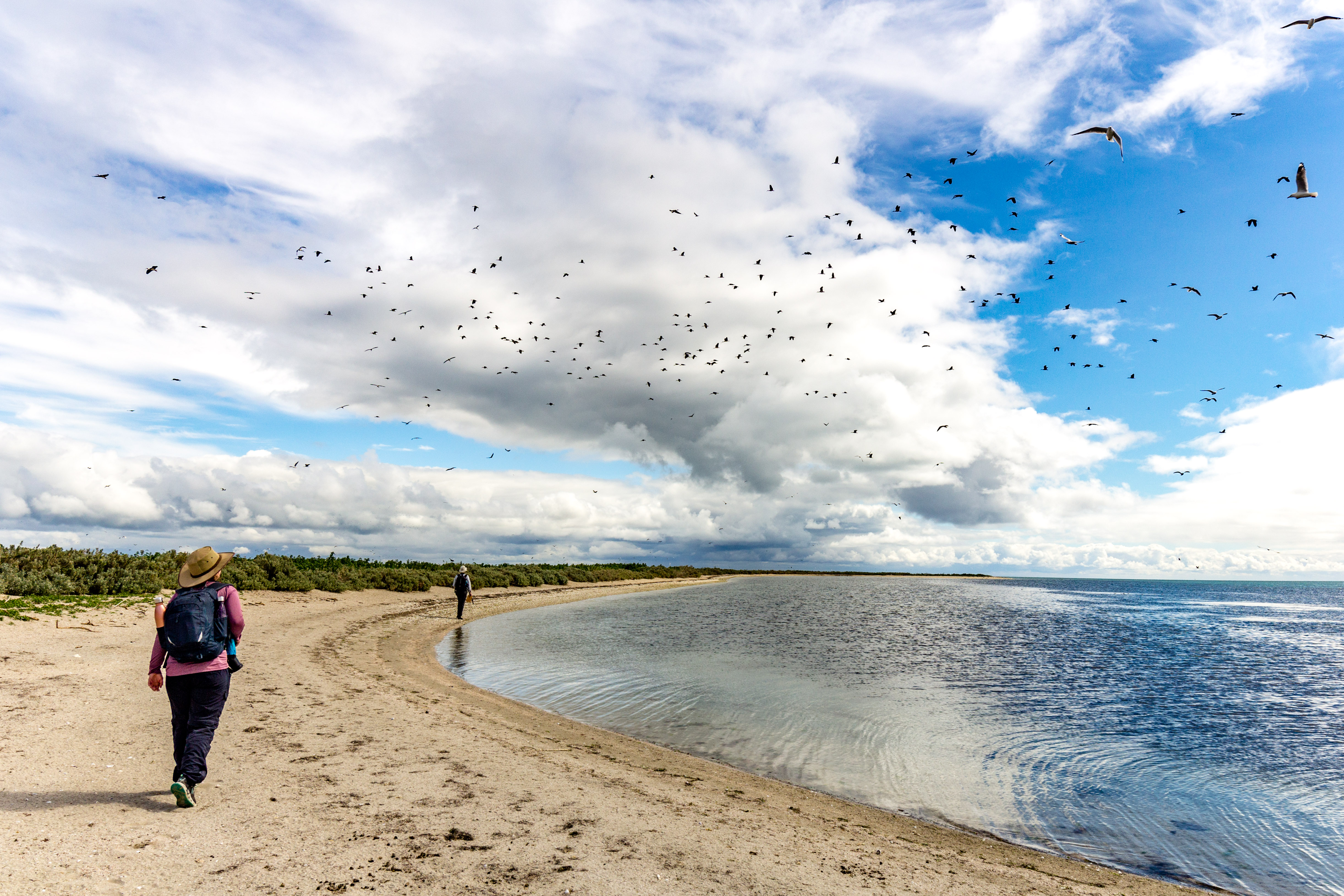
Mud Island coast - photo by Andy Geschke (ARI)
Using GPS trackers to track bird movements
Mud Islands is mostly used as a nesting site for the colonial birds. However, we have little information on where they find the food needed to breed successfully. To see where they forage in and around Mud Islands, we are tracking Silver Gulls movements and location using fitted GPS tracking devices. Insights from this movement data will reveal their foraging behaviour and how it changes over time. In the long term, we hope to extend the tracking work to other species.
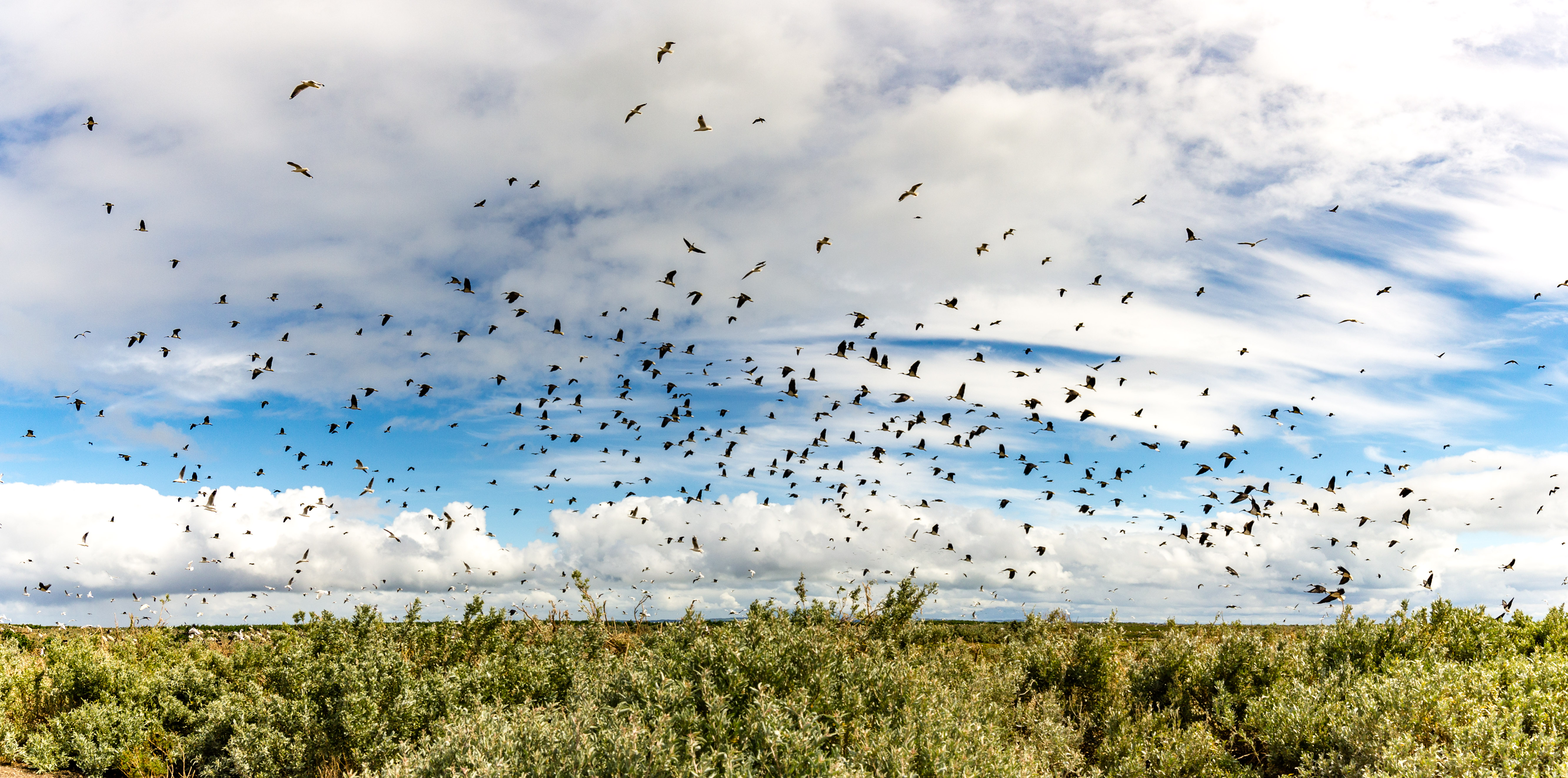
Ibis and silver gulls in flight - photo by Andy Geschke (ARI)
For more information contact Kasey Stamation, kasey.stamation@deeca.vic.gov.au or research.ari@deeca.vic.gov.au.
Acknowledgements
These activities were funded through the Victorian Government’s Port Phillip Bay Fund program.
We thank all or our project partners including the Corangamite CMA for their continued support of ARI’s bird monitoring work at Mud Islands. Over many years, they have been dedicated to working in partnership with Traditional Owners, ARI and Parks Victoria to care for Mud Islands.
Page last updated: 10/03/26