In short
|
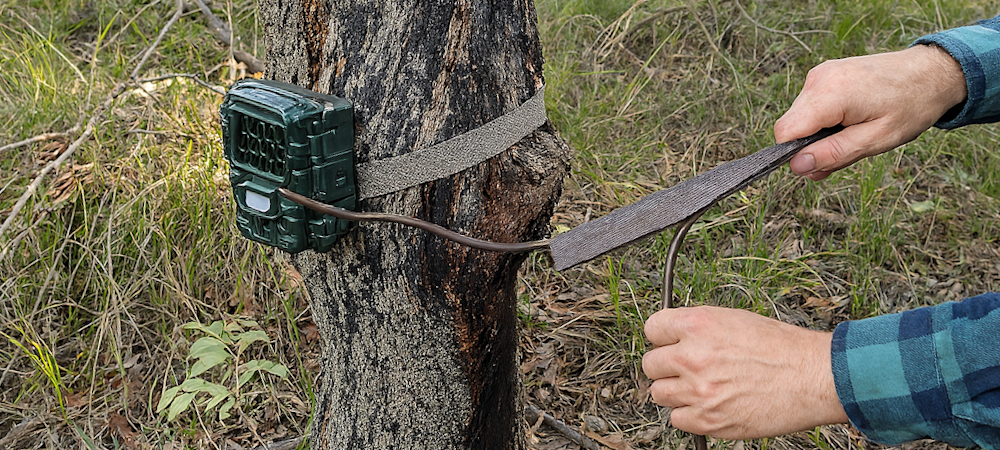
Deployment of a tree-mounted survey camera - photo by Elizabeth Wemyss.
An effective tool to survey wildlife
Understanding where animals occur, how abundant they are and how they behave is essential for assessing the conservation status of native species, pest impacts, and the effects of fire, floods and land management practices.
Many methods can be used to collect this data, with varying levels of accuracy, effort, cost and required expertise. Automated cameras, known as camera traps, can be a very efficient and cost-effective tool. A camera trap is a digital camera packaged in a small waterproof housing, that is triggered when the infrared sensor detects a moving heat source, such as an animal. Camera traps may be baited with a lure to attract wildlife or passively monitor an area depending on the research question being addressed.
Once deployed, they can be left unattended for several weeks at a time while they continue to collect data. This can generate a lot of images, requiring experienced staff to review each image before it can be used to answer research questions.
To manage the large volumes of data generated, ARI is assisting with artificial intelligence tool development on freely available platforms to speed up species identification in images. The metadata of these images are then tagged with the species name and other metrics, before being analysed in specialist software programs. This ever-growing dataset makes a significant contribution to the Victorian Biodiversity Atlas.
What we are doing
ARI has significant experience in using cameras. Since 2012, ARI has deployed at least 12,500 cameras. This is across a multitude of projects, statewide and beyond, looking at different aspects of fauna ecology.
We use two types of cameras:
- infrared-flash cameras producing night-time monochrome images that are generally suited for recording medium to large animals
- white-flash cameras producing colour night-time images suited for the identification of small mammals.
Sensitivity levels and camera settings can be adjusted to better account for a range of specific animal groups and climatic conditions.
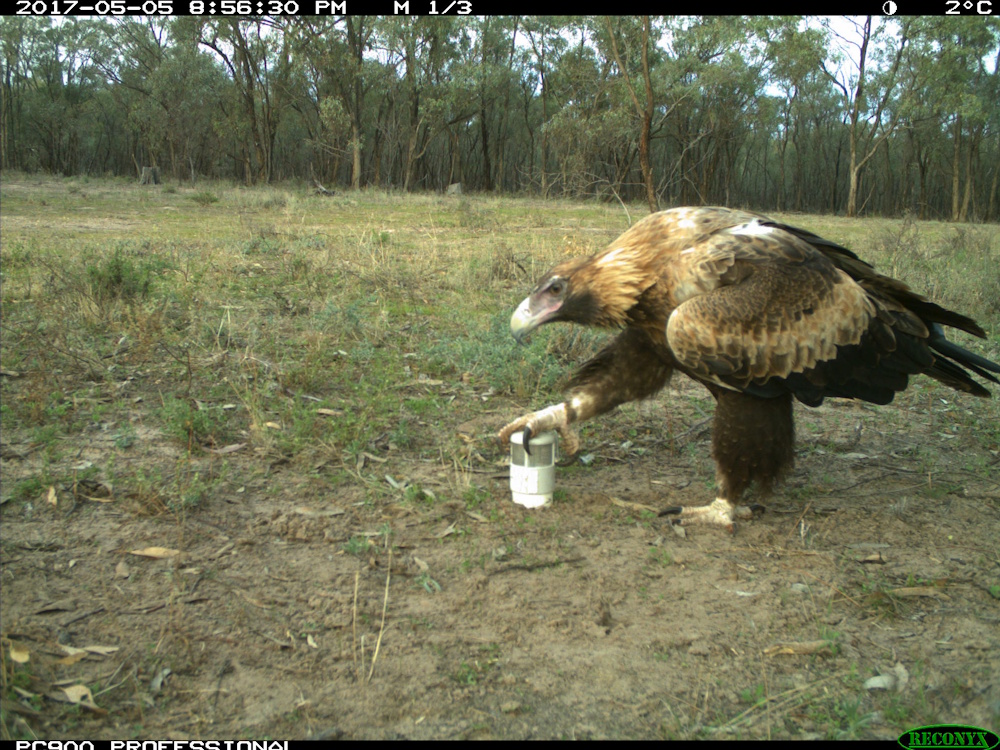 Wedge-tailed Eagle (ARI) Wedge-tailed Eagle (ARI) | 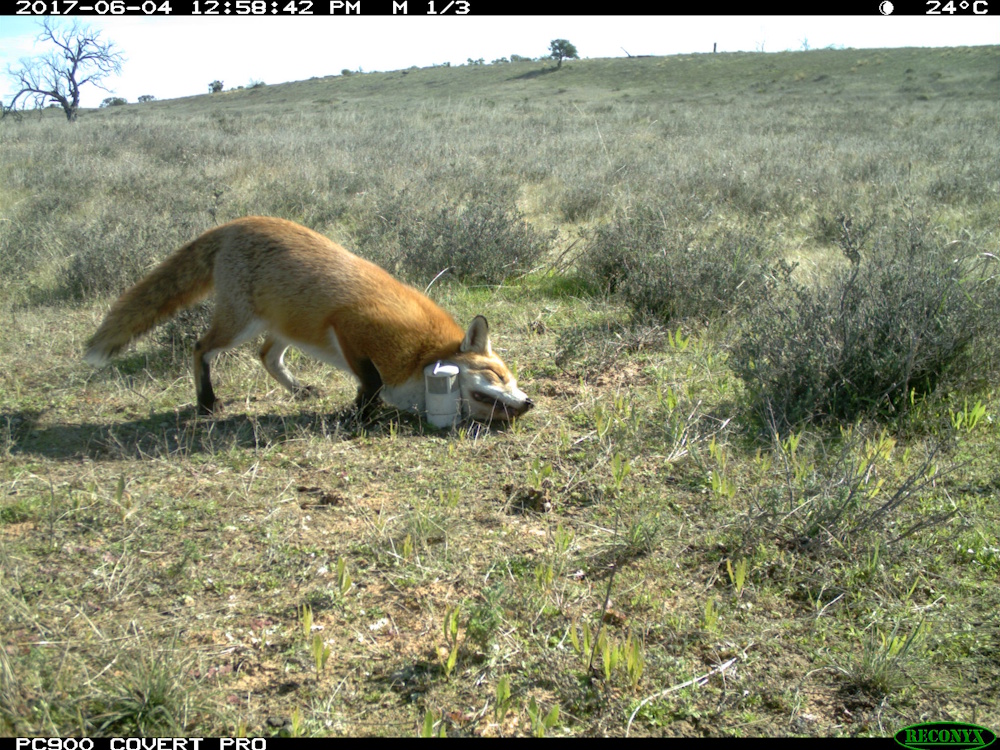 Red fox - introduced (ARI) Red fox - introduced (ARI) | 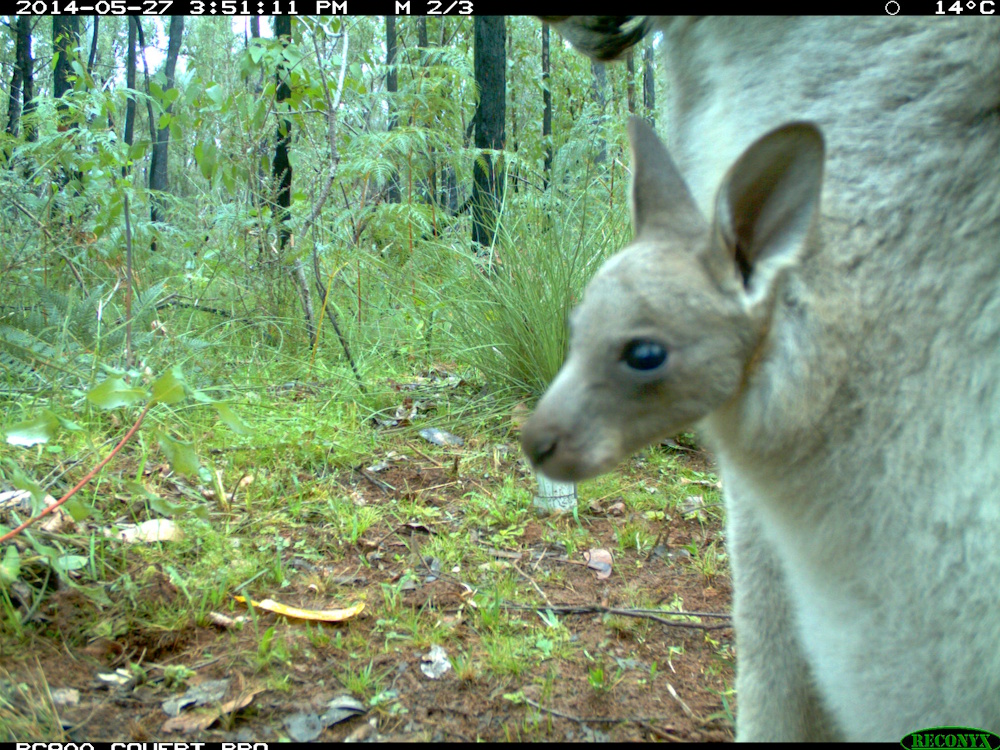 Eastern Grey Kangaroo pouch young (ARI) Eastern Grey Kangaroo pouch young (ARI) |
Analysis methods
ARI uses several camera trap monitoring designs and analysis methods. Their use depends on the scale, budget and wildlife management questions we are seeking to answer. They include:
- Camera Trap Distance Sampling (CTDS) - a sophisticated method used to estimate species abundance
- Spatially Explicit Capture-Recapture Models (SECR) – used to estimate wildlife population density and size by analysing detection locations of marked individuals
- Spatial Mark-Resight (SMR) - combines data from a small number of individually identifiable (marked) animals with data from unidentifiable (unmarked) individuals to estimate density.
Projects using camera traps
ARI projects that have used camera traps include:
Density estimates of species using CTDS | |
Monitoring animal behaviour in response to management methods | |
Investigating habitat usage and distribution of cryptic small mammals | |
Determining the presence of threatened species and introduced animals following natural disasters |
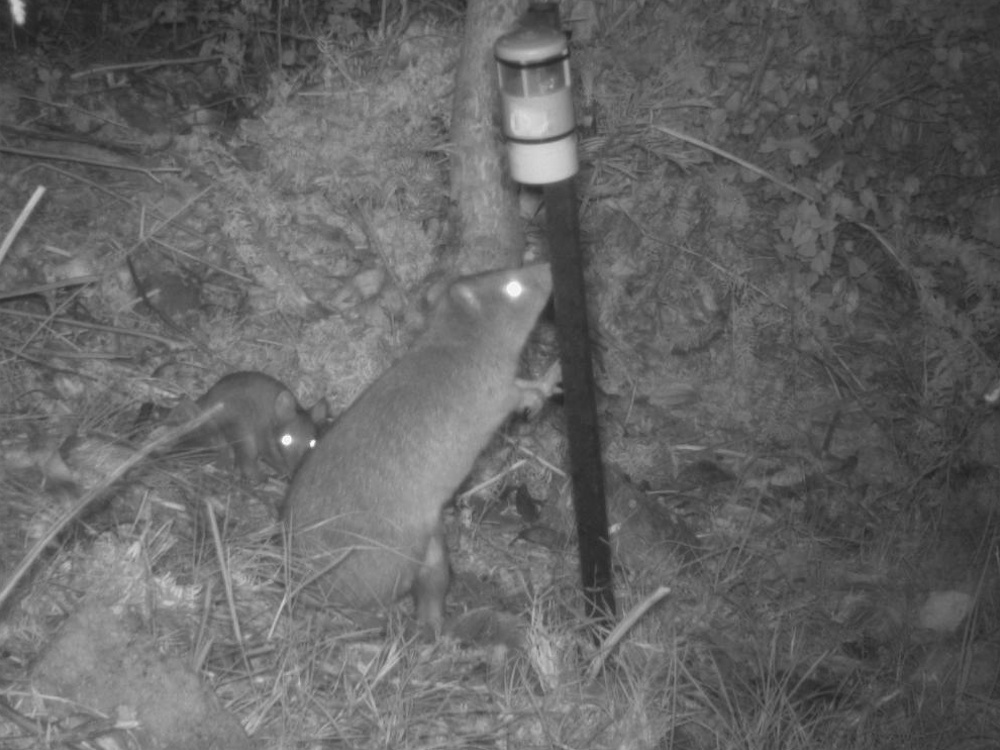
Two Long-footed Potoroos (ARI) |
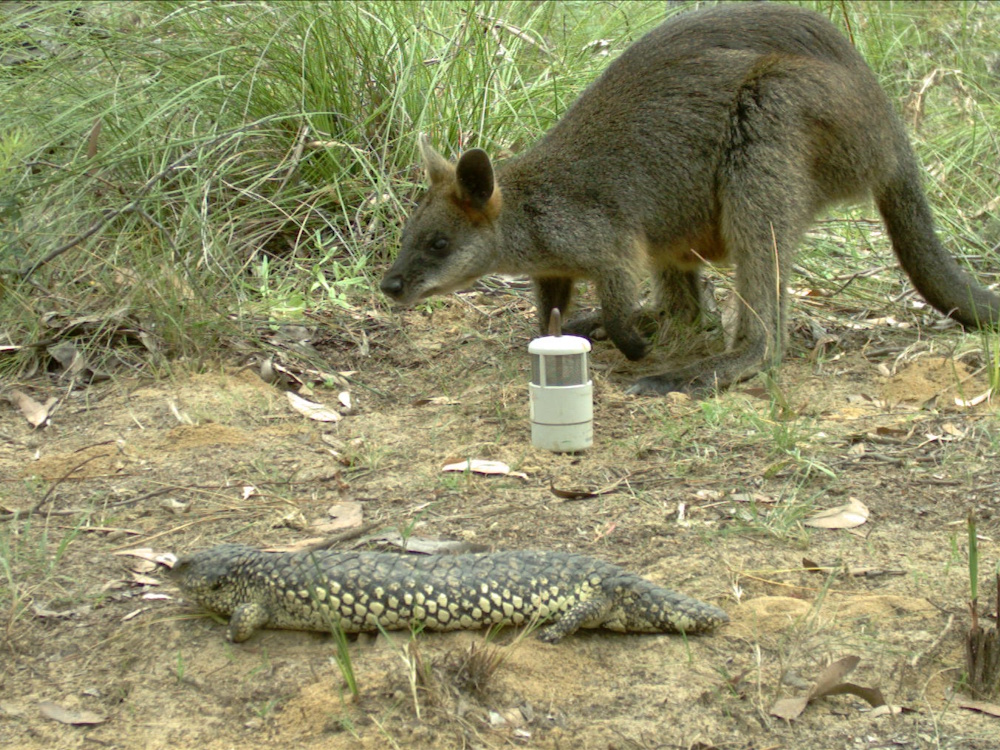
Black-tailed Wallaby with Shingleback Lizard (ARI) |
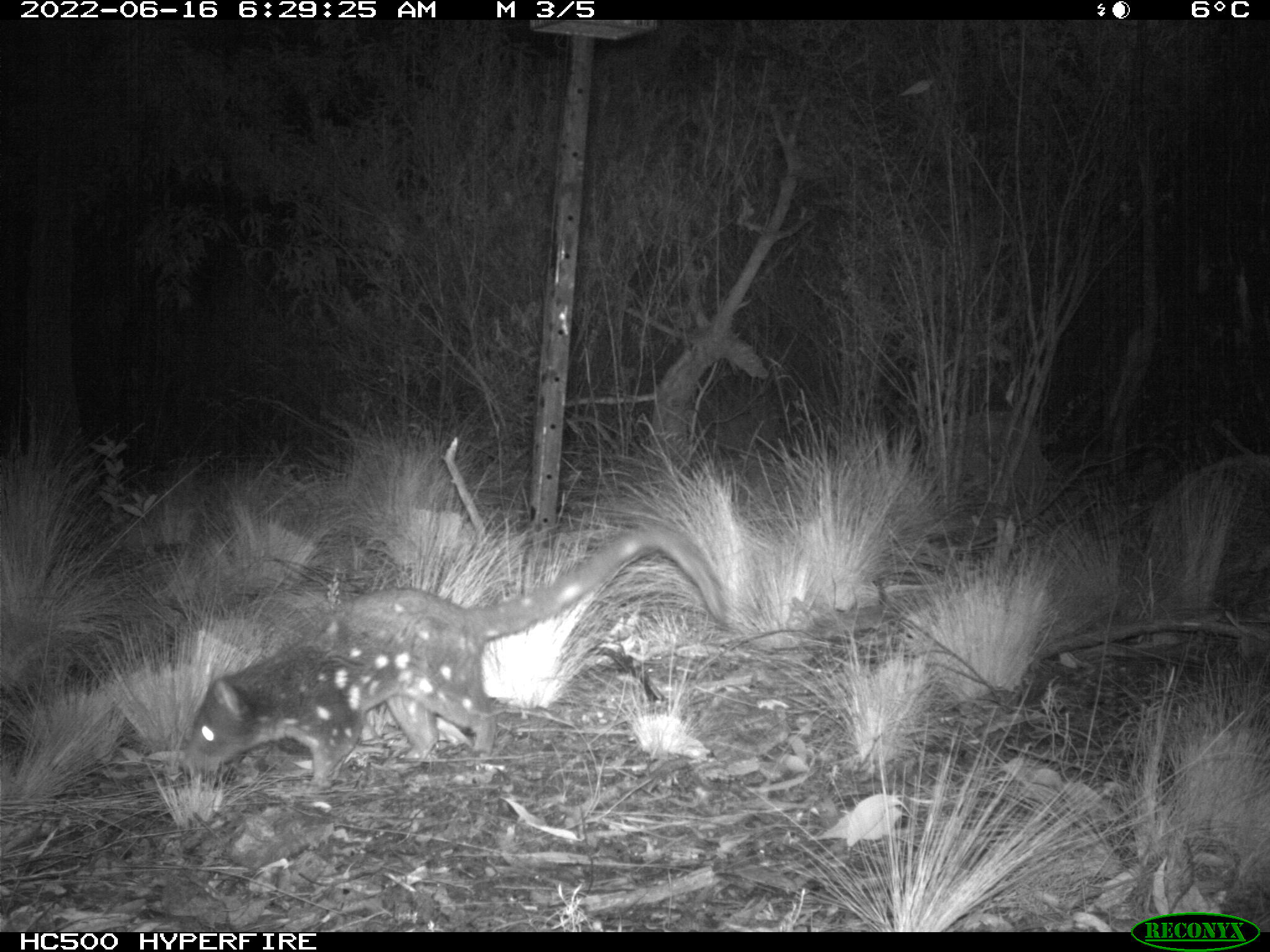
Spotted-tailed Quoll (ARI) |
How we can help
ARI offers expert advice about the effective use of camera traps and the types of management questions they can help answer. ARI has a large fleet of high-quality camera traps designed specifically for scientific research as well as providing training and guidance to stakeholders. This includes:
- Project design– how to design and implement your camera trap monitoring programs to answer your wildlife management and research questions, from camera deployment, data collection and curation to analysis. This includes making use of imagery stored in ARI’s in-house database to help reduce costs.
- Project integration – advice on how different camera trap datasets can be potentially merged and integrated to help answer other broadscale monitoring research projects.
- Methodology development – developing and refining methods for collecting the right kind of data for your needs, through camera programming and deployment methods, as well as options to incorporate artificial intelligence (AI) technologies for more efficient data curation and analysis.
- Data analysis – analysis of images to translate species counts into population estimates.
Publications
- Woodford, L. (2015) The earliest known camera trapping in Australia: a record from Victoria. The Victorian Naturalist 132(6): 171-176
- Bruce, Tom, et al. (2025) Large‐scale and long‐term wildlife research and monitoring using camera traps: a continental synthesis. Biological Reviews.
More information
For more information, contact luke.woodford@deeca.vic.gov.au or research.ari@deeca.vic.gov.au
You can see how cameras are installed, and examples of wildlife photos from our projects in our video "Camera trapping wildlife surveys".
Page last updated: 10/04/26