In short
|
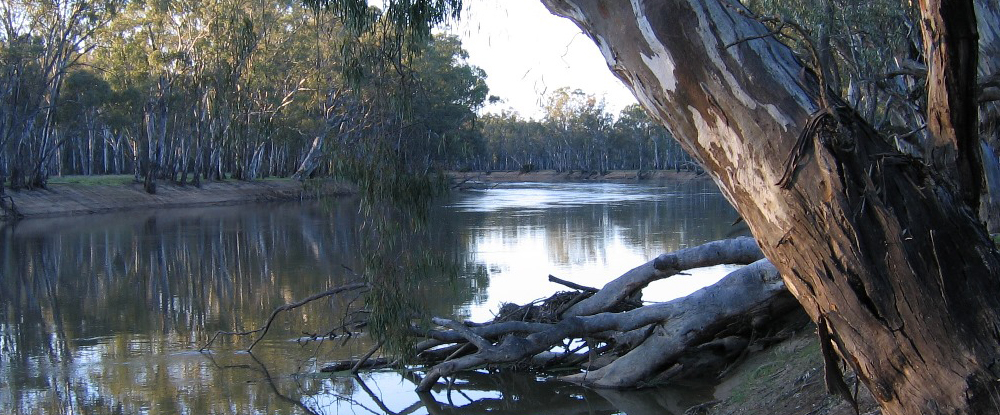
The Murray River at Gunbower. Photo by ARI.
Improving the health of the Murray River system
The Living Murray Program (TLM) is a long running river restoration program which began in 2002. The program was launched to address community and scientific concerns about the declining condition of the river system.
TLM is a joint initiative funded by the New South Wales (NSW), Victorian, South Australian, Australian Capital Territory and Australian governments, coordinated by the Murray–Darling Basin Authority.
The program uses ‘Icon sites”, places of high ecological, economic and cultural value, as monitoring locations to track changes in river system health and the performance of environmental water delivery.
TLM uses several types of monitoring including:
- Condition monitoring - Measures the overall health of ecosystems over time. This monitoring occurs annually and reports on progress against objectives and targets in Environmental Water Management Plans.
- Intervention monitoring – Measures the immediate effects of specific management actions, especially environmental watering events.
The program monitors ecological themes including vegetation, fish, crayfish, frogs, turtles, waterbirds and woodland birds.
What we are doing
ARI is contributing to both condition and intervention monitoring at Living Murray Icon sites. We are also bringing TLM data together to enhance opportunities for rigorous analysis.
Creating a TLM database
ARI is developing a database to house all monitoring data and identify priority actions regarding data collection, management, analysis, evaluation and reporting. This project aims to maximise the value of this important long-term data set.
Monitoring and research at Icon Sites
ARI is working with program partners to fill important knowledge gaps and evaluate intervention outcomes specific to Icon Site needs.
ARI work includes:
- monitoring the condition of vegetation, fish and birds (e.g. Sowersby et al. 2025)
- updating Condition Monitoring Plans
- delivering intervention monitoring in response to environmental water delivery for:
- frog occurrence (Brown et al. 2022)
- large-bodied fish movement in the Lindsay and Mulcra Island anabranch system (Kitchingman et al. 2025)
- Lake Bed, River Red Gum and Black Box woodlands
- developing a statistical model to understand vegetation response to environmental water.
ARI work includes:
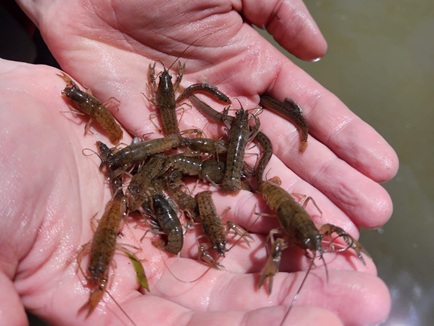
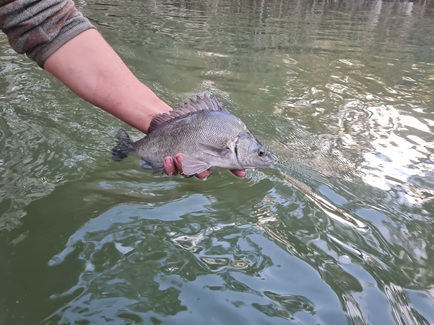
- monitoring the condition of fish and crayfish (see Raymond et al. 2025 covering 2007-2025)
- assessing the distribution and abundance of Swamp and Common Yabbies (Wootton et al. 2025)
- evaluating fish overwintering, recruitment and residency patterns (Jones et al. 2025)
- investigating movement and habitat use of large-bodied native fish (Koster et al. 2023) and if regulator manipulation can minimise fish stranding (Jones et al. 2025)
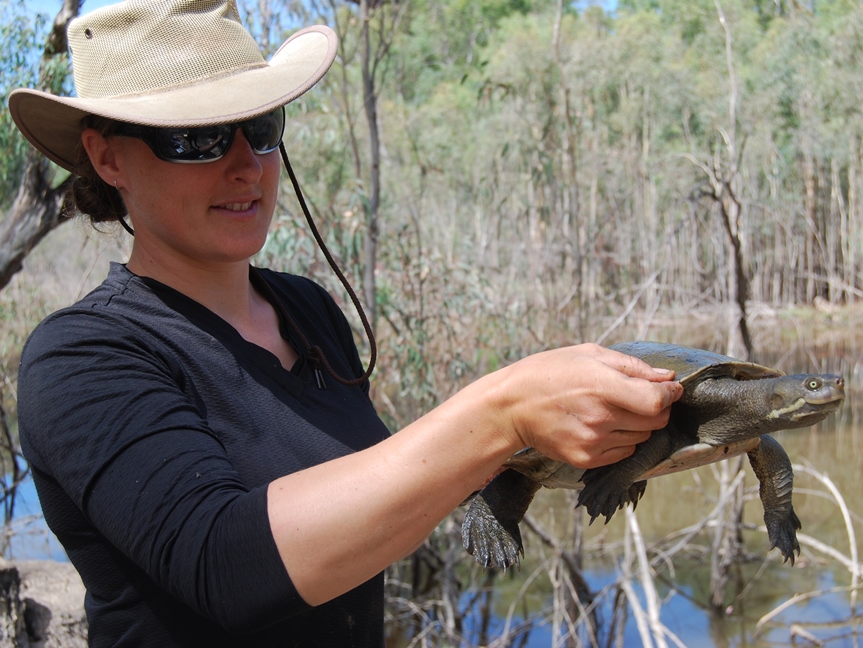
- monitoring the condition of frogs and turtles (e.g. Howard et al. 2025)
- investigating how turtle movement is influenced by river flows, through radiotracking (see Howard et al. 2025).
 |  |  |
ARI work includes:
- analysing existing datasets to better understand the relationships between vegetation condition and influencing factors, focusing on environmental water management
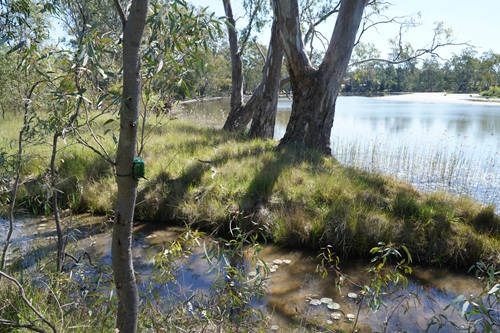
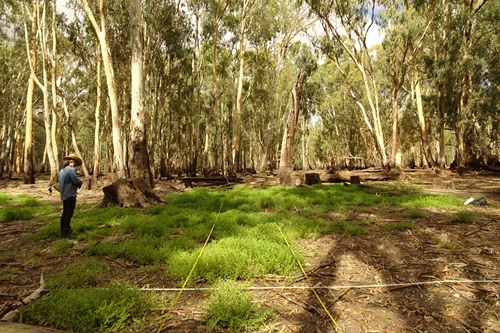
- a soil moisture study to understand its relationship to floodplain vegetation (Jones and Sparrow 2024)
- monitoring Carp movements during a managed inundation in Little Gunbower Creek (Lieschke et al. 2020)
- condition monitoring of frog populations via acoustic monitoring (Durkin and Howard 2020)
 |  |
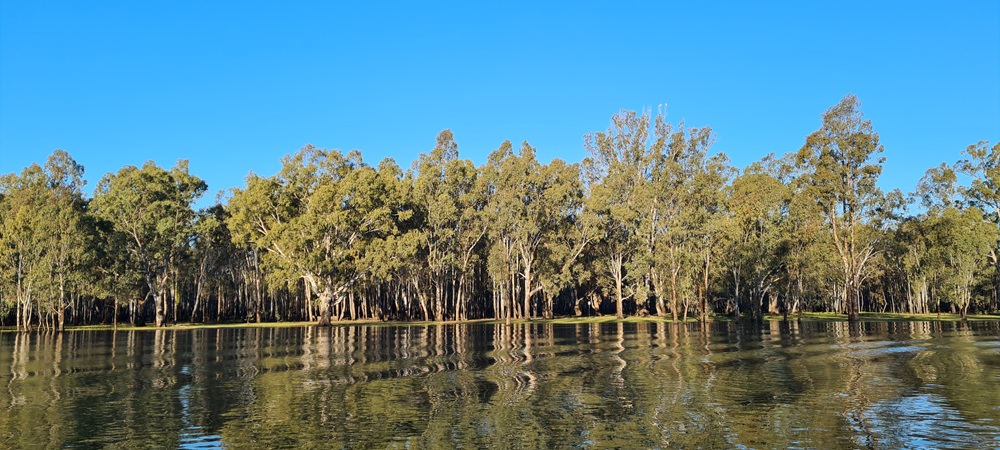
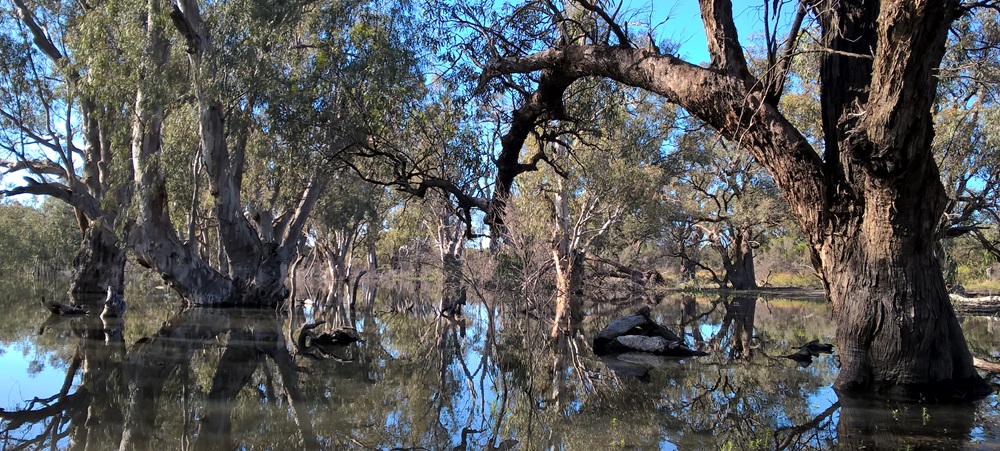
Millewa. Photo by ARI.
Research impact
ARI’s research has contributed to the wider body of monitoring and evaluation undertaken by TLM.
Reflecting on 20 years of the program, you can find the series of reports showcasing the findings across all Icon sites and the program as a whole at The Living Murray – much achieved, much to do.
More information
For more information about the Living Muray Program and Icon Sites, visit The Living Murray Program
Page last updated: 15/09/26