In short
|
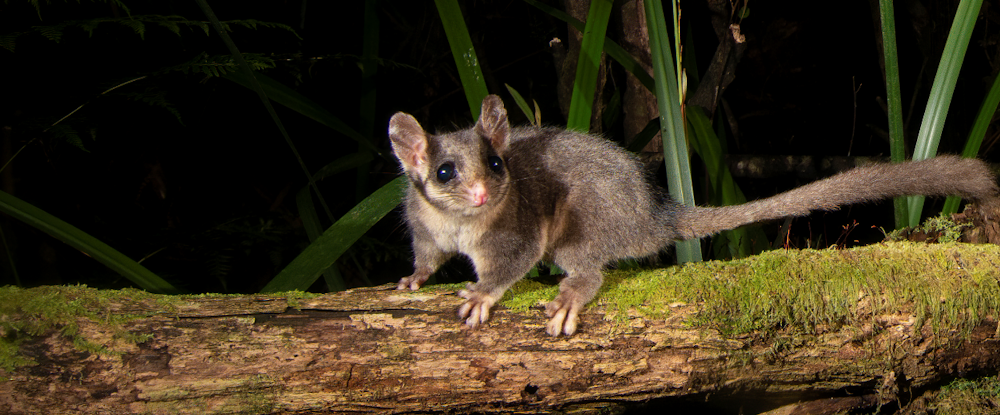
Leadbeater’s Possum. Photo by Justin Cally (ARI)
Surveys for the cryptic faunal emblem of Victoria
The Leadbeater’s Possum is a small, arboreal possum that is listed as Critically Endangered nationally under the Environment Protection and Biodiversity Conservation Act 1999. They were presumed extinct for several decades until 1961, when they were rediscovered in Victoria.
Leadbeater’s Possum populations are largely confined to the Ash forests and sub-alpine woodlands of the Central Highlands, northeast of Melbourne, with a lowland population near Yellingbo. They depend on suitable large old trees with hollows for shelter and nesting, and on forests with dense mid-storey vegetation, often including gum-producing wattle, for movement and foraging. Because of their habitat preferences, populations have been severely affected by native timber harvesting and high-intensity bushfires.
After the 2009 bushfires burnt 34% of the species’ suitable habitat, the Leadbeater’s Possum Advisory Group was formed and made 13 recommendations to support its recovery. These included establishing timber harvest exclusion zones around all verified records from 1998 onwards, to protect colonies and their habitat. ARI undertook many surveys to locate colonies for protection in these zones. In January 2024, commercial native timber harvesting ceased in Victoria’s state forests.
What we are doing
ARI’s research on Leadbeater’s Possum has largely centred around understanding their ecology and distribution in relation to native timber harvesting, bushfire and fire management. We are also researching methods that restore critical habitat features such as tree hollows.
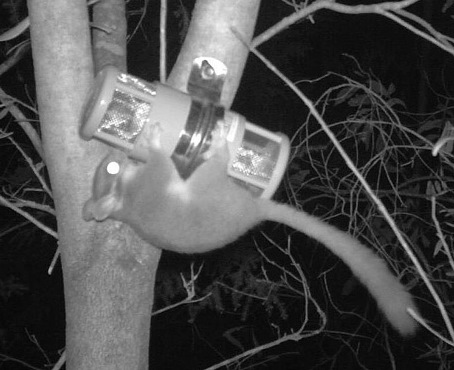
To better survey species that spend most of their lives in trees, ARI developed novel arboreal camera trapping methods that have now been widely adopted by DEECA. The method involves ARI ecologists working with arborists to install cameras in trees, using creamed honey as a lure.
Cameras are set on tree trunks at varying heights (up to 47 m), targeting areas of well-connected vegetation, such as wattle foliage, where possums are most likely to be moving or foraging.
Because the arboreal camera trap survey method has proved highly reliable for detecting Leadbeater's Possums, it has been applied in other DEECA programs including the previous Forest Protection Survey Program (now discontinued) and the modernisation of the Victorian Regional Forest Agreements (Landscape Scale Surveys), as well as by our project partners.
The refinement of survey techniques has allowed us to develop a more accurate picture of where Leadbeater’s Possum populations occur. This in turn allows for more informed assessments of the impacts of bushfires, fire management activities and other disturbances, such as severe storms.
Publications
- ARI Technical Report 278 (2017). Targeted surveys to improve Leadbeater’s Possum conservation. (PDF, 1.7 MB) (DOCX, 4.2 MB)
- ARI Report (2015) Targeted surveys for Leadbeater's Possum in 2014-15. Report for the Leadbeater's Possum Implementation Committee.
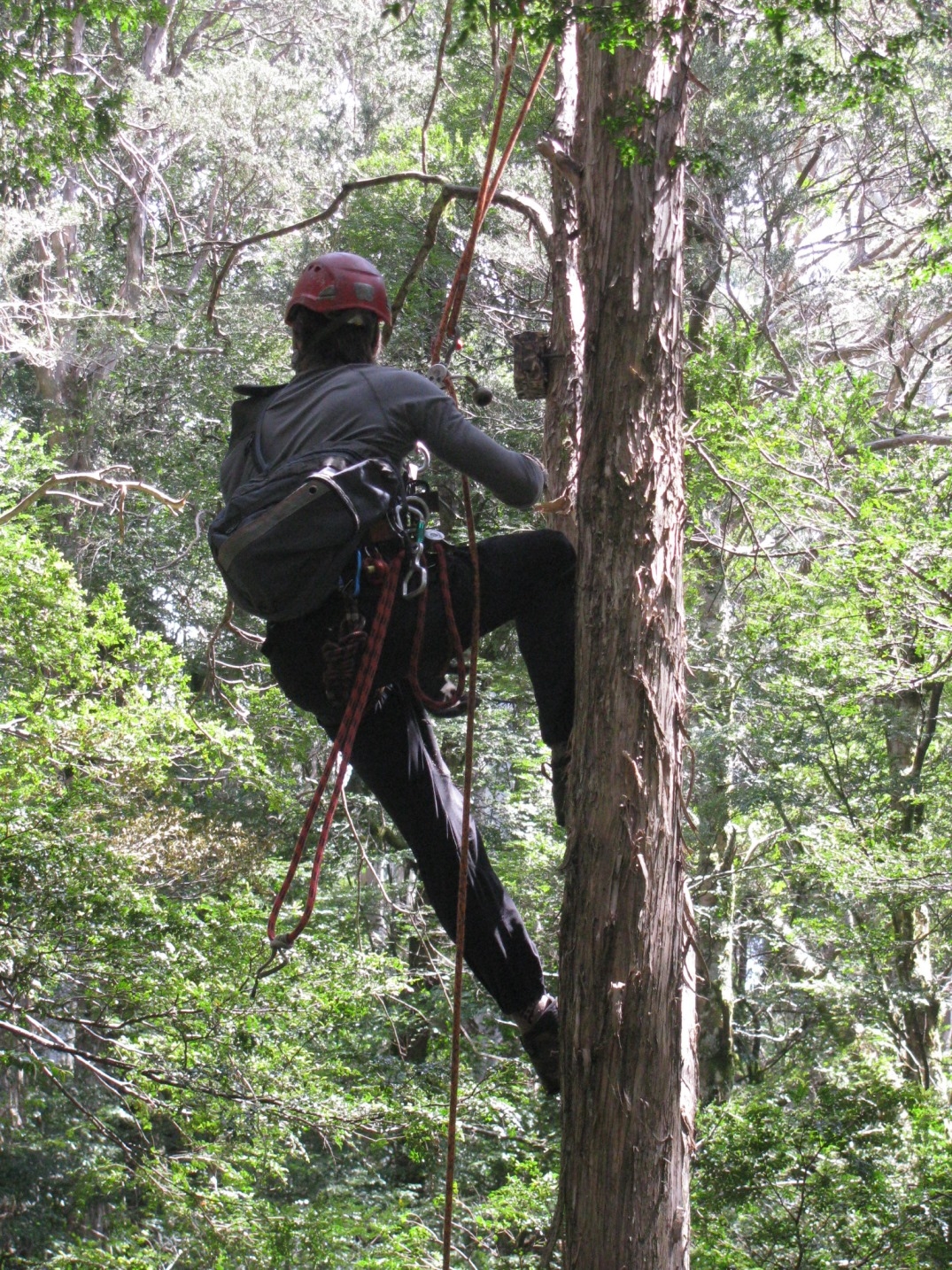
An arborist inspecting a tree-mounted camera trap. Photo by ARI.
ARI has surveyed nearly 500 sites using the arboreal camera trapping method to locate colonies, identify their habitat and to inform the establishment of the previous timber harvesting exclusion zones. Sites were selected using sophisticated predictive modelling and targeted areas where the species was most likely to occur.
Leadbeater’s Possums were detected at 46% of sites, contributing to thousands of hectares of further protected habitat up until January 2024 , when the Victorian Government announced that commercial native timber harvesting would cease in Victoria’s state forests. Clusters of protection zones were formed to create possum ‘neighbourhoods’. These protections were significant during the period when native timber harvesting occurred in the species’ habitat.
The findings from this study were used extensively in a review of the effectiveness of establishing timber harvesting exclusion zones around Leadbeater’s Possum colonies.
As part of the Regional Forest Agreements (RFA) update, ARI surveyed for Leadbeater’s Possums in atypical habitats to inform the Habitat Distribution Model (HDM). Surveys were conducted in forests on the edge of ash forest habitat within the species’ core range, and in areas with suitable habitat that were outside the known range. This work resulted in a range expansion northeast of the core population area.
Publications
- Macak et al. (2024) Short range extension delineating the north-eastern limit, and use of atypical habitat by highland Leadbeater’s possum. Australian Mammalogy.
- Eyre et al. (2025) A possum’s cautionary tale: targeted surveys in north-eastern Victoria fail to detect Leadbeater’s possum in remnant forest within its historic range. Australian Mammalogy.
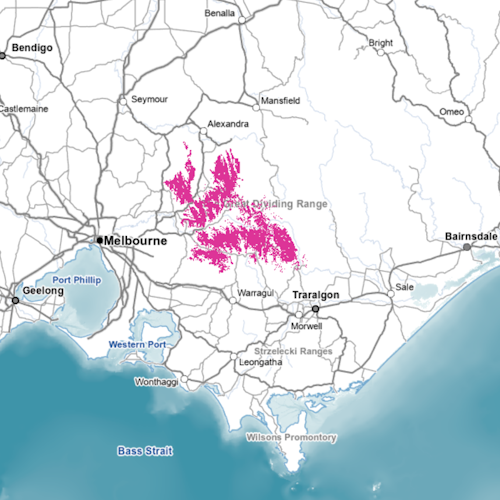
Leadbeaters Possum habitat distribution map as on NatureKit (DEECA).
ARI examined the recolonisation of burnt Leadbeater’s Possum habitat following the 2009 bushfires. The presence of unburnt habitat (refugia) positively influenced the occurrence of possums. Additionally, habitat that remained unburnt in 2009, but where fire or timber harvesting had occurred before then, was also found to have higher Leadbeater’s Possum occupancy.
For the remaining intact habitat patches, possum presence was not affected by how close they were to unburnt areas outside the fire perimeter. This suggests that populations are recovering primarily through animals surviving within the burnt landscape, rather than by recolonisation from surrounding unburnt habitat.
Publications
- Durkin et al. (2024). Unburnt refugia support post-fire population recovery of a threatened arboreal marsupial, Leadbeater’s possum. Forest Ecology and Management.
The shortage of tree hollows is a major barrier to Leadbeater’s Possum recovery. Many suitable hollows had developed in old fire‑killed trees (‘stags’) following the 1939 bushfires. However, many of these are now collapsing. Native timber harvesting and more recent fires have further reduced hollow availability. An ongoing decline in suitable hollows remains one of the most acute threats to the species.
ARI has helped design supplementary tree hollows that can be carved by arborists using a chainsaw. These carved tree hollows have a large internal diameter and a small entrance, characteristics that Leadbeater’s Possums favour in natural hollows. The possums complete the final touches by bringing shredded bark into the hollow to form a nest.
As part of a trial, 132 hollows were carved and have been monitored since 2015. Of these, 66% have been used by Leadbeater’s Possums, including throughout the year and for breeding. There has been little impact on tree health, and only two brief occurrences of use by invasive species.
These carved hollows have benefits compared to nest boxes, as they are less vulnerable to storm damage, have lower predation risks, and more stable internal microclimates. They do however require regular maintenance (e.g. every 5 years) to keep the entrances open.
The design and implementation of the novel artificial hollows are helping Leadbeater’s Possum colonies establish after disturbance events. They provide a management option to supplement natural hollows in areas where there is a shortage of these critical habitat features.
Publications
- Griffiths et al. (2022). Chainsaw hollows carved into live trees provide well insulated supplementary shelters for wildlife during extreme heat. Wildlife Research.
- McComb et al. (2022). Climate and behaviour influence thermal suitability of artificial hollows for a critically endangered mammal. Animal Conservation.
|
|
A chainsaw carved hollow in a Mountain Ash tree. Photo by Treetec | A Leadbeater’s possum using a chainsaw carved hollow. Photo by ARI. |


Strategic fuel breaks are strips of land where vegetation has been permanently removed or thinned in an attempt to reduce the rate of spread of fire, and to assist fire control.
ARI evaluated the effectiveness of mitigation measures used during upgrades to a strategic fuel break in the Port Phillip region. As part of this, trees deemed hazardous or that may impede fire control operations were removed, many within habitat used by Leadbeater’s Possums.
Mitigation measures, including exclusion zones, habitat retention areas, wildlife corridors and rope bridges, were established and monitored over three years at twelve sites.
ARI research showed that detection rates were slightly higher in wildlife corridors and near rope bridges, compared to exclusion and retention zones. Rope bridge monitoring suggested that there was frequent possum activity, with detection rates of 70- 76% at the two monitored bridges, although full crossings could not be confirmed.
Overall, the findings indicate that these mitigation measures supported the persistence of Leadbeater’s Possums despite habitat disturbance. The study highlights the importance of targeted habitat protection strategies.
With the increased use of strategic fuel breaks as a tool to help manage the impact of large-scale bushfires, our research is helping identify which mitigation methods are effective at minimising impacts on Leadbeater’s Possum populations.
Publications
- Rodriguez-Malagon et al. (2024). Strategic Fuel Breaks: Mitigations Effectiveness for Leadbeater’s Possum - Yarra Ranges National Park. Unpublished Client Report for DEECA.
Acknowledgements
These projects were all funded by the Victorian State Government.
More information
For more information contact Dr Pia Lentini (pia.lentini@deeca.vic.gov.au).
Page last updated: 15/09/26