In short
|
How do rivers respond to environmental water?
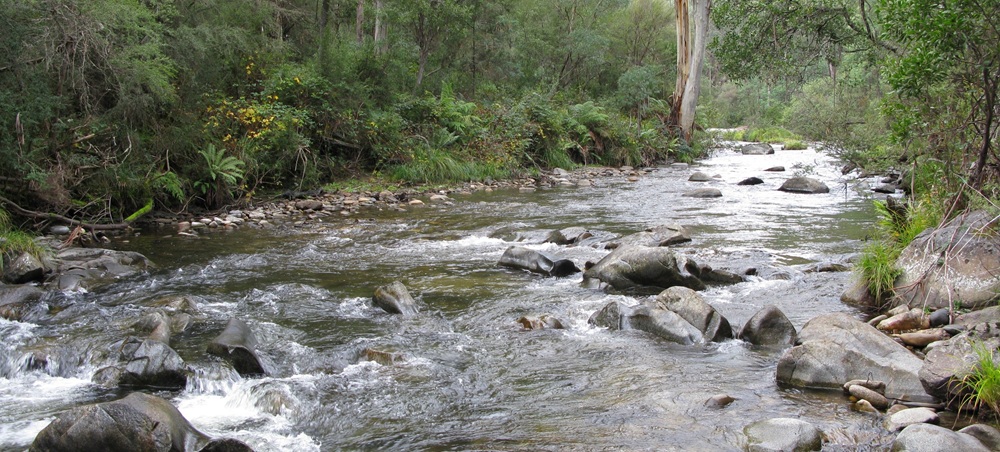
The Victorian Environmental Flows Monitoring and Assessment Program (VEFMAP) was a large-scale, long-term monitoring program. It was designed to assess ecosystem responses to changes in flow regime in regulated Victorian rivers that receive environmental water.
Its core objectives were to:
- demonstrate ecological outcomes of environmental water management
- fill knowledge gaps to improve planning, delivery and evaluation of environmental water management and
- collect data required for reporting under the Murray–Darling Basin Plan.
The program commenced in 2007 and ARI led the monitoring between 2015 and 2024. The program was delivered through 7 stages.
Stage 7 (2020-2024)
Stage 7 revised the approach to management and governance of the program. A new Program Steering Committee and a new Independent Scientific Review Panel (ISRP) were established with revised Terms of Reference and membership. Extensive consultation occurred with key stakeholders within catchment management authorities and the Victorian Environmental Water Holder. A suite of project proposals was developed, reviewed and prioritised according to stakeholder and scientific input.
The following projects, within the Fish and Vegetation themes were carried out. These projects varied in terms of when they commenced, their size and timeframe (i.e. some were short term, desk-based review projects, while others were longer-term and involved field-based monitoring).
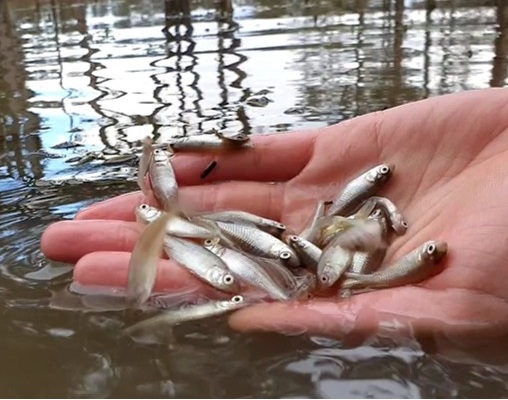
The VEFMAP fish theme continued the long-term annual fish condition monitoring ((PDF, 2.7 MB), (DOCX, 22.4 KB)) to assess population status and trends. In addition, there were five other projects which involved:
- development of population models for key species to assess flow management outcomes and opportunities for refinement ((PDF, 2.5 MB), (DOCX, 22.5 KB))
- identification of key flow and habitat needs of early life stages of fish and decapods and how flows can be managed to benefit such species ((PDF, 2.0 MB), (DOCX, 22.2 KB))
- investigation of the effect of flows on downstream migration of eels ((PDF, 1.7 MB), (DOCX, 21.8 KB))
- assessment of the links between flows and recruitment of River Blackfish and
- a desktop review of low flow recommendations for fish within Seasonal Watering Plans and related documents.
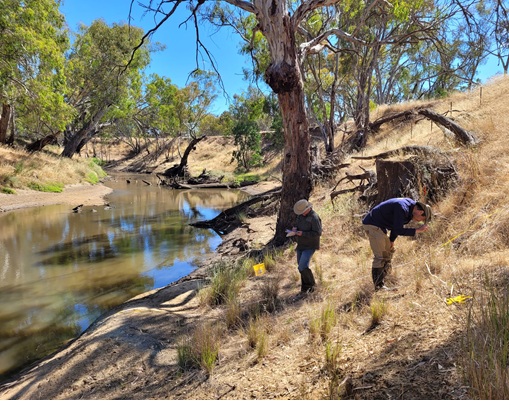
The VEFMAP vegetation theme included four projects which involved:
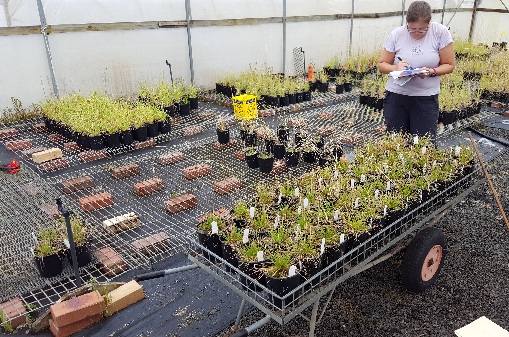
- quantification of the effects of flows (and non-flow factors) on waterway vegetation ((PDF, 3.3 MB), (DOCX, 26.1 KB))
- comparing flow and non-flow drivers of riparian vegetation communities and their interactions ((PDF, 651.2 KB), (DOCX, 54.3 KB))
- evaluation of the impact of environmental flows on reproduction and recruitment of riparian vegetation and
- evaluation of the importance of summer/autumn low flows for aquatic vegetation recruitment ((PDF, 2.7 MB), (DOCX, 22.4 KB)).
A combined VEFMAP WetMAP Summary Report provides a brief outline of the purpose and findings of each project delivered within the programs, and implications for environmental water management. It is a starting point for readers seeking to understand the breadth of the work that was delivered.
Two other projects were undertaken:
- to monitor the condition of riparian vegetation communities to contribute to long-term data collection to support Basin Plan reporting.
- to characterise flow metrics to enable effective evaluation of the influence of flows on vegetation communities.
The final unpublished ARI reports for each project are listed below. Please contact Research.ARI@deeca.vic.gov.au to obtain copies or further information:
Fish
- Amtstaetter, F. et al. (2024). Flow regime and water temperature influence recruitment success of blackfish in south-eastern Australia.
- Koster, W. et al. (2025). Patterns and environmental and biological attributes associated with downstream migration of Short-finned Eels across multiple river systems.
- O’Connor, J. et al. (2025). A review of VEFMAP low-flow watering recommendations to meet fish objectives across Victoria: An assessment of supporting data, and identification of priority knowledge gaps.
- Tonkin, Z. et al. (2024). Assessing long-term population trends for priority fish species across Victorian rivers.
- Tonkin, Z. et al. (2024). Flow and habitat requirements of early-life stages of native fish and macrocrustaceans: Implications for management through time and space.
- Yen, J. et al. (2024). Do species interactions influence outcomes from environmental flows? A case study in populations of Victorian riverine fish.
- Yen, J. et al. (2024). Interactions between fish and aquatic vegetation: Implications for environmental flows.
- Yen, J. et al. (2024). Near-term ecological projections to inform environmental flows: A case study in populations of three native fish in multiple rivers.
Annual fish monitoring reports were also prepared for northern and southern Victorian waterways.
- Amtstaetter, F. et al. (2024) VEFMAP coastal rivers annual monitoring results 2024.
- Tonkin, Z. et al. (2024) VEFMAP northern rivers annual monitoring results 2024.
- Amtstaetter, F. et al. (2022) VEFMAP coastal rivers annual monitoring results 2022.
- Tonkin, Z. et al. (2022) VEFMAP northern rivers annual monitoring results 2022.
Vegetation
- Crowther, D. and Jones, C. (2024). VEFMAP vegetation monitoring for Basin Plan reporting 2023-24.
- Jones, C.S. et al. (2024). Managing river low flows to enhance instream vegetation recruitment.
- Jones, C. S. et al. (2025). Vegetation responses to managed river flow events and regimes.
- Good, M. and Jones, C.S. (2024). A State and Transition framework to guide riparian woodland vegetation management and environmental water decisions.
- Nystrand, M. et al. (2025). Assessing the relative influence of environmental flow components and non-flow factors on riverine vegetation: an expert elicitation approach.
- Streamology (2023). VEFMAP hydrological and hydraulic investigation.
Stage 6 (2016-2020)
Stage 6 of the program was developed following comprehensive engagement across stakeholders including DEECA, Victorian catchment management authorities, the Victorian Environmental Water Holder, an Independent Review Panel and consultants.
Its core objectives were to: demonstrate ecological outcomes of environmental water management; fill knowledge gaps to improve planning, delivery and evaluation of environmental water management; and collect data required for reporting under the Murray–Darling Basin Plan.
Key features of Stage 6 included a rigorous scientific approach, strong communication, particularly with waterway managers, and a focus on sharing findings in a timely manner to support and inform improved management of environmental water. This stage included an increased focus on intervention-based monitoring to better understand and confirm fish and vegetation responses to environmental flow events.
The Stage 6 final report provides a synthesis of the approach taken, key findings and achievements and includes summaries for all core areas of monitoring and research and are available below:
- Tonkin, Z., et al. (2020) Victorian Environmental Flows Monitoring and Assessment Program. Stage 6 Synthesis Report 2016-2020. (PDF, 7.4 MB) Arthur Rylah Institute for Environmental Research Technical Report Series No. 316. Department of Environment, Land, Water and Planning, Heidelberg, Victoria
(accessible version (DOCX, 10.6 MB))
A brochure has also been produced to summarise Stage 6 and its achievements:
- VEFMAP brochure Stage 6 - results 2016-2020 (PDF, 2.8 MB)
(accessible version (DOCX, 35.2 KB))
Two webinar videos showcase the research findings of VEFMAP Stage 6 and can be found here::
VEFMAP Stage 6 Showcase – Part 1 – Vegetation outcomes and management implications
VEFMAP Stage 6 Showcase – Part 2 – Fish outcomes and management implications
Supplementary materials provide further detailed monitoring and research outcomes that support the final report. These are presented as a series of ARI unpublished client reports and journal articles:
ARI unpublished client reports
- O’Connor, J., et al. (2020) Managing river flows to enhance upstream dispersal and retention of Golden Perch in a highly regulated lowland river system.
- Jones, M.J., et al. (2020) Environmental flows cue fish movement and improve fishway functionality: case studies from a semi-arid river-floodplain system.
- Amtstaetter, F. and Koster, W. (2020) VEFMAP Stage 6: Long term fish community monitoring in the Thomson and Glenelg rivers.
- Harris, A., et al. (2020) Using Otolith Microchemistry to Assign Natal Origin to Juvenile Murray Cod.
- Jones, C.S. et al. (2020) Environmental flows help structure fish and vegetation communities in a regulated semi-arid intermittent stream system.
- Jones, C.S. et al. (2020) Evaluating the influence of environmental flows on vegetation in regulated rivers.
- Jones, C.S. et al. (2020) Understanding the links between environmental flows and soil moisture in waterways to improve vegetation condition.
- Jones, C.S. et al. (2020) Vegetation recruitment in river channels and the role of environmental flows on plant germination.
- Todd, C., et al. (2020) Predicting long-term population responses by Murray Cod and Silver Perch to flow management in the Goulburn and Campaspe rivers: a stochastic population modelling approach.
- Vivian, L. et al. (2020) Drivers of the distribution and community composition of riparian vegetation in regulated rivers of Victoria.
Fact sheet:
- VEFMAP fact sheet Stage 6 - Murray Cod, flows and recruitment (PDF, 283.4 KB)
(accessible version (DOCX, 2.3 MB))
A citizen science component was also undertaken where recreational fishers contributed fish ear bones (otoliths) from the fish they caught for the dinner table. This was added to existing data that will be analysed during Stage 6.
Over the four years of VEFMAP Stage 6, numerous outputs have been produced.
At the commencement of the stage, the following fact sheets, poster, monitoring manuals and video detailed the development, objectives and approach:
- VEFMAP Fact sheet Stage 6 (PDF, 906.7 KB)
(accessible version (DOCX, 5.0 MB)) - VEFMAP Poster Stage 6 - Overview (PDF, 4.4 MB)
- VEFMAP Stage 6 monitoring manual Part A - Program context and rationale (PDF, 2.2 MB)
(accessible version (DOCX, 2.1 MB)) - VEFMAP Stage 6 monitoring manual Part B - Program design and monitoring methods (PDF, 2.3 MB)
(accessible version (DOCX, 4.5 MB))
A short video on VEFMAP Stage 6 is available on the DEECA YouTube channel.
Each year, annual reports and fact sheets outlining progress were prepared.
|
|
Stage 5 (2015-2016)
During Stage 5, DEECA's Water and Catchments worked with ARI and the University of Melbourne to review and analyse data collected through VEFMAP and other complementary research, and to explore the relationship between environmental water releases and ecological responses of native fish and vegetation. This provided valuable baseline information to support management decisions. Findings included:
- confirmation of the threatened status of 11 native fish species, and of the dominance of the non-native Carp.
- changes over time in abundance and distribution of certain native and non-native fish species.
- identification of ecological responses to environmental flows during regional case studies of Australian Grayling, Golden Perch and Silver Perch (see fact sheets).
- reduced encroachment of terrestrial vegetation into river channels in response to prolonged periods of inundation.
- increased abundance of native riparian vegetation in response to short periods of inundation.
ARI developed four fact sheets that summarised key results:
- VEFMAP Fact sheet 1: Benefits of environmental water (PDF, 410.3 KB)
(accessible version (DOCX, 299.2 KB)) - VEFMAP Fact sheet 2: Australian Grayling migration (PDF, 561.4 KB)
(accessible version (DOCX, 495.1 KB)) - VEFMAP Fact sheet 3: Australian Grayling spawning (PDF, 436.7 KB)
(accessible version (DOCX, 664.0 KB)) - VEFMAP Fact sheet 4: Golden Perch spawning (PDF, 460.4 KB)
(accessible version (DOCX, 997.2 KB))
 |  |
Stages 1-4 (2005-2014)
Following the development phase of the program (Stages 1 and 2), monitoring commenced in eight regulated rivers in 2007 (Stage 3, 2007–2016; coordinated by Jacobs). Stage 4 involved a detailed analysis of VEFMAP data through to 2012 (led by The University of Melbourne), as well as a full program review (led by Peter Cottingham and Associates).
Journal articles
See below for articles where the work was either funded by VEFMAP or the results are directly relevant to this program:
Fish
- Amtstaetter, F. and Suter, S. (2020). Environmental flow releases trigger spawning of a threatened fish: Research insights and publication enhance management, credibility and relationships. Aquatic Conservation: Marine and Freshwater Ecosystems 30(9): 1723-1726
- Amtstaetter, F. et al. (2021). Environmental flows stimulate the upstream movement of juvenile diadromous fishes. Marine and Freshwater Research 72(7): 1019-1026
- Amtstaetter, F. et al. (2021). Elevated river discharge enhances the immigration of juvenile diadromous fishes into temperate coastal rivers. Journal of Fish Biology 99(1): 61-72
- Jones, M. et al. (2025). More than the sum of their parts – Environmental flows increase fish movement and fishway functionality. Ecological Engineering 214.
- Koster, W.M. et al. (2020). Environmental influences on the juvenile migration of the threatened amphidromous Australian grayling (Prototroctes maraena). Marine and Freshwater Research. 72(3), 411–417.
- Koster, W.M. et al. (2020). Environmental influences on migration patterns and pathways of a threatened potamodromous fish in a regulated lowland river network. Ecohydrology, e2260.
- O'Dwyer, J. E. et al. (2021). An investigation of genetic connectivity shines a light on the relative roles of isolation by distance and oceanic currents in three diadromous fish species. Marine and Freshwater Research, 72(10).
- Tonkin, Z. et al. (2021). Linking flow attributes to recruitment to inform water management for an Australian freshwater fish with an equilibrium life-history strategy. Science of The Total Environment 752: 141863
- Yen, J. et al. (2021). Underlying trends confound estimates of fish population responses to river discharge. Freshwater Biology 66(9): 1799-1812
Vegetation
- Deng et al. (2024). Soil moisture influences the root characteristics of a herbaceous riparian plant along a regulated river. Plant Ecology, 225(1), 25-36.
- Good, M. K., and Jones, C. S. (2026). A state and transition framework to guide riparian woodland vegetation management and environmental water decisions. Ecological Applications, 36(3), e70256.
- Jones, C. et al. (2025). Managing river low flows to enhance instream vegetation recruitment. Environmental Management 75 (7), 1845–1858. doi:10.1007/s00267-025-02187-1
- McNamara, et al. (2025). Livestock grazing and dense willow shading negatively impact instream plant growth. River Research and Applications: no. 9: 1925–1939. https://doi.org/10.1002/rra.70004.
- Wijepala, et al. (2025). Effects of seasonal inundation on riparian plant growth and reproduction. River Research and Applications: no. 1: 176–190. https://doi.org/10.1002/rra.70049.
- Gould, E. et al. (2026). ‘But I can’t preregister my research’: Improving the reproducibility and transparency of ecology and conservation with adaptive repregistration for model-based research. Methods in Ecology and Evolution.
- Kitanovic, V. et al. (2023). Riparian and terrestrial grasses display unexpected tolerance to cool-season inundation. Wetlands Ecology and Management.
- Main et al. (2022) Warmer water temperatures exacerbate the negative impacts of inundation on herbaceous riparian plants. Freshwater Biology.
- Pereira, M. et al. (2021). Native riparian species dominate the soil seedbank of in-channel geomorphic features of a regulated river. Environmental Management 67: 589-599.
- Vivian, L., et al. (2020). Responses of grasses to experimental submergence in summer: implications for the management of unseasonal flows in regulated rivers. Aquatic Ecology 54(4), 985–999.
- Vivian, L. M. et al. (2026). Drivers of occurrence, richness and extent of instream plants in flow-regulated rivers of south-eastern Australia. Australian Journal of Botany 74, BT25087. https://doi.org/10.1071/BT25087
More information
For more information about this program, contact Research.ARI@deeca.vic.gov.au
Page last updated: 28/07/26