In short
|
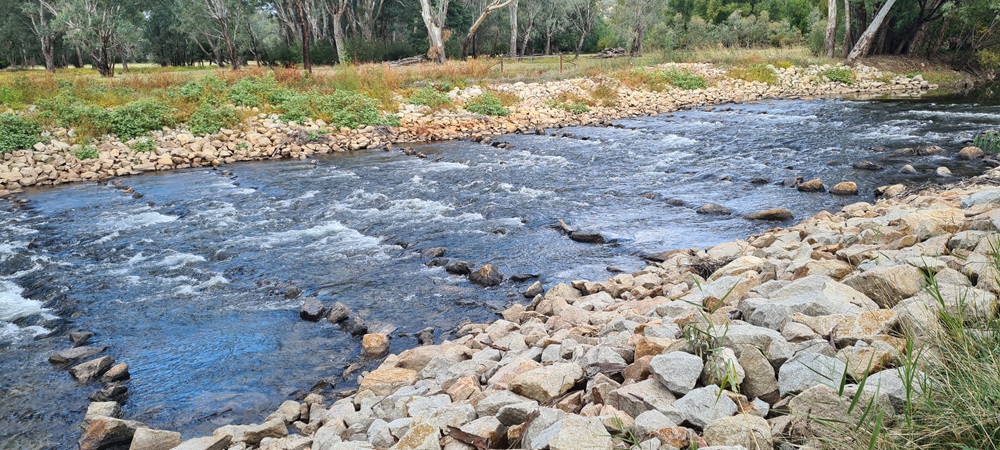
Rock ramp fishway. Photo by Matt Jones.
Fish need to move freely
Fish need to move between different habitats to feed, breed, find shelter and complete their life cycle. Many species regularly travel upstream and downstream, sometimes over hundreds of kilometres, while others move into wetlands and floodplains when conditions are suitable.
Healthy rivers allow fish to move freely throughout the waterway network. However, many rivers have been modified through the construction of dams, weirs and culverts to support water supply, irrigation, navigation and other community needs. While these structures provide important benefits, they can also block fish movement, alter natural flow patterns and change water quality.
When fish are unable to reach important habitats, their populations can decline, and some species become less widespread. Improving connectivity between habitats helps native fish access the food, shelter and breeding areas they need to survive and thrive.
Fishways can improve river connectivity
Installation of fishways is a key method to help improve river connectivity to benefit fish. Fishway designs vary greatly. For large barriers, an appropriately designed fishway may include multiple rows of rocks or a series of connected concrete chambers. For barriers greater in height, fully automated structures that trap and move fish upstream are usually required.
Fishway designs are based on the ability of specific fish species to swim and manoeuvre against a current, and consider specific water velocities, turbulence, depth and light levels. For example, it can be more challenging to design fishways for fish less than 40 mm in length to pass through, as small fish have less swimming ability.
What we are doing
ARI has a long history in guiding the enhancement of river connection including:
- prioritizing barriers in need of fishways or removal
- design of fishway structures
- monitoring and evaluation of the effectiveness of fishways in passing fish
- remediation and maintenance of existing structures to improve their effectiveness.
We work closely with catchment management authorities, water authorities and the community to reconnect rivers across Victoria to help improve native fish populations.
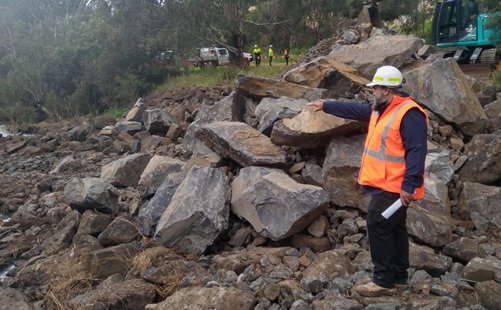 | 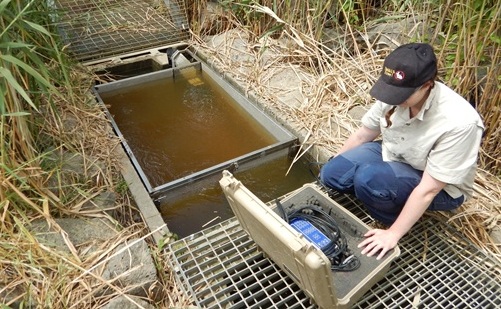 | 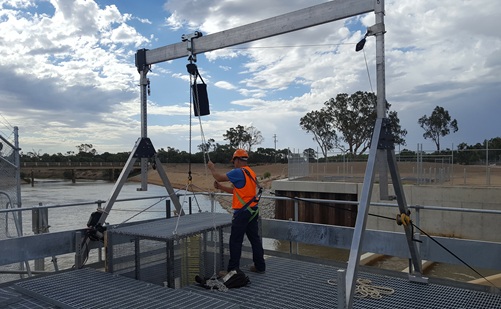 |
Research and Monitoring examples
Mildura Weir is a major barrier to fish movement in the Murray River, particularly for migratory species such as Golden Perch. Improving fish passage at this site is critical for maintaining connectivity between populations in the lower Murray and Darling rivers and those further upstream.
ARI investigated ways to improve fish passage by testing alternative fishway entrance designs, refining attraction flows near the fishway entrance and assessing whether the boat navigation lock could provide an alternative migration pathway. We used acoustic tracking technology to monitor the movements of 125 tagged Golden Perch around the weir and navigation lock, along with trapping the entrance and exit of the fishway.
Fishway trapping collected up to more than 400 Golden Perch per day using the fishway during periods of high river flow, demonstrating much greater fish movement than previously observed. However, radiotagged fish indicated only a small proportion of tagged fish successfully passed the weir, confirming that the structure remains a significant barrier to migration.
The project identified opportunities to improve fish passage through better weir-flow management, strategic weir removals, modifications to fishway and navigation-lock operations, and consideration of modern fishway designs in any future weir replacement. This work was funded by the Commonwealth Environmental Water Holder and DEECA Water and Catchment.
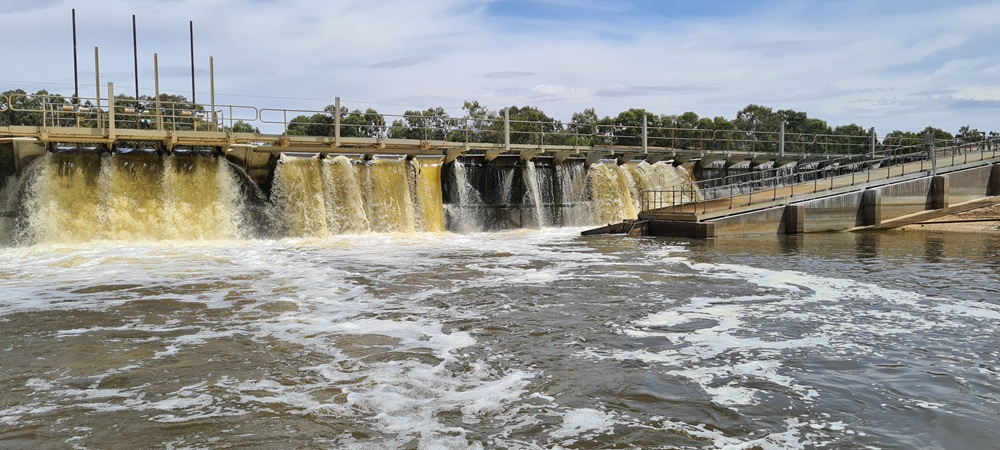
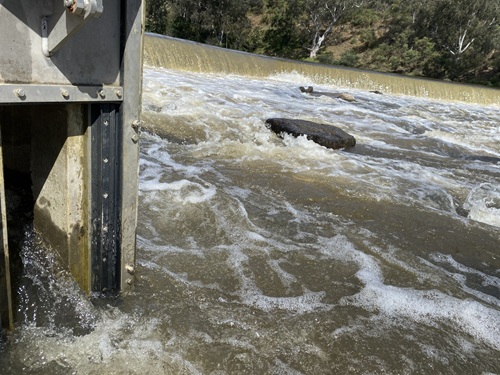
Mildura weir. Photo by Matt Jones.
The Tea Gardens weir fishway was built in 2023 to restore fish passage around the Tea Gardens weir on the Ovens River, one of Victoria’s most important rivers for native fish. ARI assessed whether the new rock-ramp fishway was improving connectivity and supporting the movement of native fish.
Researchers evaluated the fishway using hydraulic measurements, fish trapping, acoustic telemetry and long-term fish monitoring data. More than 120 native fish, including Murray Cod, Trout Cod, Macquarie Perch and Golden Perch, were fitted with acoustic tags to track their movements through the river system.
The fishway successfully passed a broad range of native fish species and size classes, including both small-bodied and large-bodied fish. Acoustic tracking confirmed that fish were moving both upstream and downstream through the structure, improving connectivity that had previously been restricted by the weir.
While the fishway substantially improved connectivity, some hydraulic conditions did not fully meet design targets, particularly during higher flows. The study identified opportunities to improve fish passage by refining fishway hydraulics and recommended ongoing monitoring to track long-term benefits for native fish populations in the Ovens River. This work was funded by the North East Catchment Management Authority.
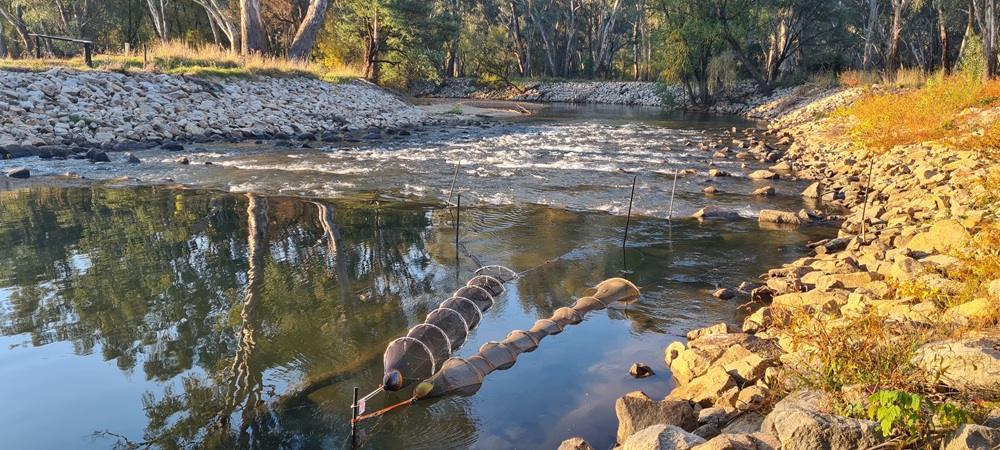
Fyke netting at Tea Gardens fishway. Photo by Matt Jones.
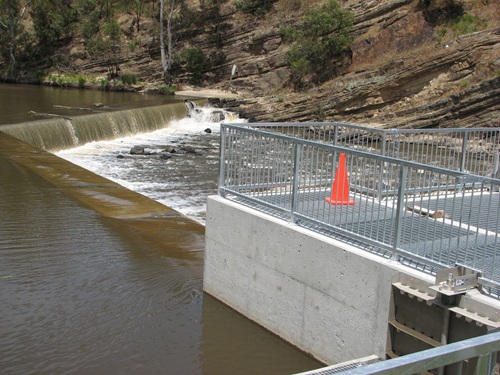
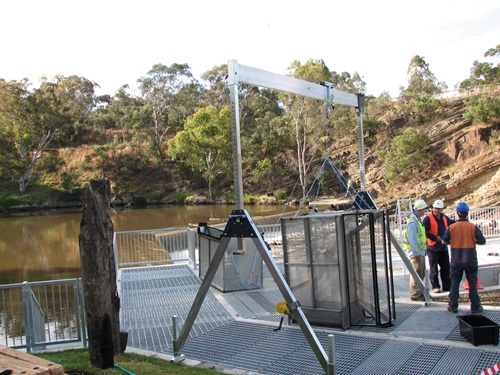
Dights Falls is the most significant barrier to fish movement in the Yarra River, restricting access to hundreds of kilometres of upstream habitat. For over 30 years, ARI has worked with Melbourne Water and other partners to assess fish passage at the site and improve connectivity for migratory fish.
ARI’s early assessments of the original rock-ramp fishway found that while some fish could pass the structure, poor attraction flows and hydraulic conditions limited its effectiveness, particularly for migratory species moving upstream. These studies identified opportunities to improve fishway design and operation.
ARI subsequently helped evaluate the performance of the new Dights Falls fishway, which combines rock-ramp and vertical-slot designs. Monitoring showed that the fishway was being used by a wide range of species and life stages, including the threatened Australian Grayling. Fishway assessments, population surveys and long-term monitoring were used to determine whether improved passage was benefiting fish populations throughout the Yarra catchment. Most recently ARI focused on improving the effectiveness of fishway entrances at Dights Falls and monitoring how these improvements are restoring migration pathways for diadromous fish species throughout the Yarra River catchment.
Publication: O’Connor et al. (2025). Remediating a fishway entrance to improve fish attraction: a framework for success. Journal of Ecohydraulics.
 |  |  |
ARI prepared four key documents to support a range of actions relating to the maintenance and improvement of river connectivity within the Victorian Waterway Management Strategy (DEPI 2013). These documents provide guidance on fish passage across Victoria:
- ARI Technical Report 274 (2017) Guidelines for the design, approval and construction of fishways. (PDF, 3.0 MB) (DOCX, 7.7 MB)
- ARI Technical Report 276 (2017) Guidelines for fish passage at small structures. (PDF, 2.3 MB) ((DOCX, 6.7 MB))
- ARI Technical Report 257 (2017) Monitoring the performance of fishways and fish passage works. (PDF, 2.2 MB) (DOCX, 4.6 MB)
- ARI Technical Report 262 (2015) Performance, operation and maintenance guidelines for fishways and fish passage works. (PDF, 4.6 MB) (DOCX, 13.5 MB)
Stream connectivity is essential for healthy native fish populations, particularly species that migrate between freshwater and marine environments. Across Victoria, there are hundreds of stream gauging stations can act as barriers to fish movement, even though they provide critical information for flood forecasting, water management and environmental monitoring.
ARI worked with DEECA and water-sector partners to assess approximately 820 stream gauging stations across Victoria and determine their impact on fish passage. The program combines information on gauge characteristics such as height, location, stream hydrology, nearby barriers and the distribution of migratory fish species to identify sites where connectivity improvements are needed most.
The project helped prioritise upgrades and rehabilitation works while maintaining the accuracy of streamflow monitoring. Potential solutions include installing fishways, removing or relocating gauge controls, replacing ageing infrastructure, and adopting modern monitoring technologies.
By improving fish passage and modernising water-monitoring infrastructure, the program provides a valuable opportunity to enhance connectivity for native fish across Victoria’s river networks while continuing to support water management, environmental monitoring and public safety outcomes. For more information see Fish Friendly Stream Gauging Station Program.
How we can help
ARI offers expert support to guide approaches to improve fish passage including:
- Specialist technical advice - on fish passage projects including design, construction methods and monitoring and evaluation approaches.
- Project guidance – expert advice on prioritising barriers, both large and small, in need of fishways, and remediation and maintenance of existing structures.
- Filling knowledge gaps – delivering targeted research to assess the effectiveness of existing fishway structures to maximise fish passage for fish communities. This includes the use of a diverse range of fish tagging techniques and large, long-term fish data sets.
Publications
- O’Connor et al. (2025). Remediating a fishway entrance to improve fish attraction: a framework for success. Journal of Ecohydraulics.
- Amtstaetter et al. (2024). Fishways provide catchment-scale improvements to Common Galaxias (Galaxias maculatus) upstream of a barrier in south-eastern Australia. New Zealand Journal of Marine and Freshwater Research.
- O’Connor et al. (2022). Developing performance standards in fish passage: Integrating ecology, engineering and socio-economics. Ecological Engineering.
- Keep et al. (2020), Low light intensities increase avoidance behaviour of diurnal fish species: implications for use of road culverts by fish. Fish Biology.
- Koster et al. (2020). Habitat use, movement and activity of two large-bodied native riverine fishes in a regulated lowland weir pool. Journal of Fish Biology.
- O'Connor et al. (2019). Assessment of a vertical slot fishway in south‐eastern Australia designed to pass numerous species and size classes of fish. Ecological Management and Restoration.
- Stuart et al. (2019). Evaluation of cone fishways to facilitate passage of small-bodied fish. Aquaculture and Fisheries.
- O'Connor et al. (2015). Prioritising the rehabilitation of fish passage in a regulated river system based on fish movement. Ecological Management and Restoration.
- Amtstaetter et al. (2017). Remediation of upstream passage for migrating Galaxias (Family: Galaxiidae) through a pipe culvert. Fish Management and Ecology.
- Jones et al. (2017). Low light inhibits native fish movement through a vertical-slot fishway: implications for engineering design. Fish Management and Ecology.
More information
For further information contact: justin.oconnor@deeca.vic.gov.au or matthew.jones@deeca.vic.gov.au
Page last updated: 15/09/26