In short
|
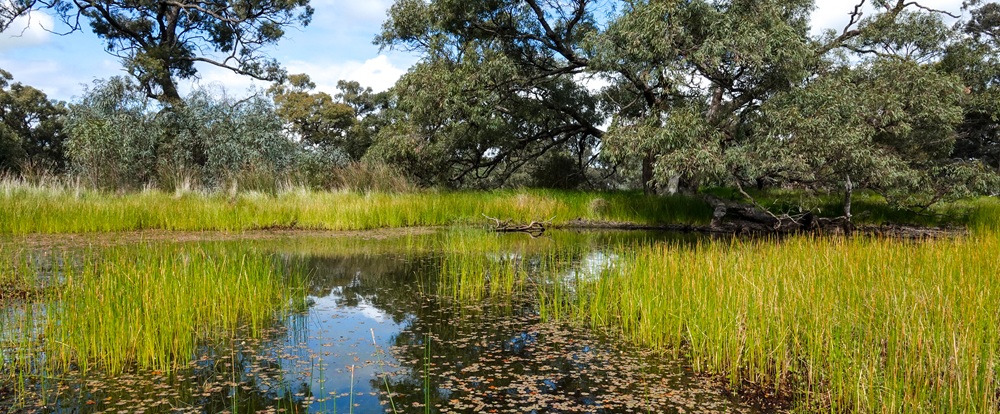
Science to guide environmental watering for wetlands
The Wetland Monitoring and Assessment Program (WetMAP) program measured the response of wetland vegetation and a range of fauna to the delivery of environmental water. This program’s research aimed to support the:
- more effective use of environmental water
- prioritisation of watering locations across the state
- identification of types of water regimes needed to support wetland biodiversity
- reporting for the Murray-Darling Basin Plan.
The program was delivered in 4 stages, and ARI led delivery of Stages 3 and 4. This approach allowed for learnings to inform the program over time.
Stage 4 (2020-2024)
Stage 4 revised the management and governance of the program, seeking to have a more coordinated and combined approach to program delivery and governance. A new Program Steering Committee and a new Independent Scientific Review Panel (ISRP) were established with revised Terms of Reference and membership.
Extensive consultation occurred with key stakeholders within catchment management authorities and the Victorian Environmental Water Holder. A suite of project proposals was developed, reviewed and prioritised according to stakeholder and scientific input.
Wetland monitoring
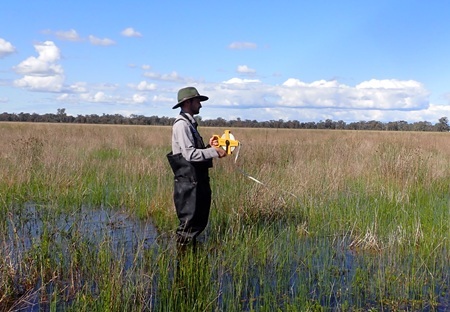
A major component of Stage 6 was monitoring the condition of vegetation, bird and frog communities in a range of wetlands. This built on data previously collected to contribute to our understanding of the benefits of environmental water (Wetland Monitoring 2022-24, (DOCX, 1.8 MB)
ARI delivered projects within the Bird, Vegetation and Fish themes. These projects were of varying size, timeframes and start dates; some were short term, desk-based review projects, while others were longer-term and involved field-based monitoring.
Bird theme
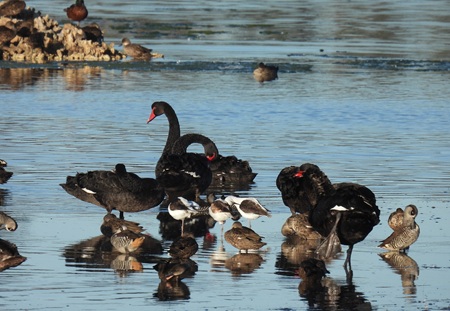
The WetMAP bird theme included three projects which involved:
- investigation of how waterbird numbers vary across seasons and how this may affect responses to environmental water ((PDF, 1.2 MB), (DOCX, 22.3 KB))
- investigation of the habitat requirements of waterbirds and the water regimes required to support this habitat ((PDF, 3.2 MB), (DOCX, 26.9 KB))
- tracking threatened waterbirds to improve understanding of how environmental water can be used to support these species ((PDF, 805.9 KB), (DOCX, 26.7 KB)).
Vegetation theme
The WetMAP vegetation theme included three projects which involved:
- updating knowledge on the ecology, distribution and physiology of Tall Marsh, including the evaluation of the success of past Tall Marsh management. The output from this project will inform future management of these species ((PDF, 2.2 MB), (DOCX, 38.8 KB)).
- investigating the seasonal timing of inundation on wetland plant composition and growth. This work includes a workshop (held in December 2021) and synthesis of current knowledge and implications for autumn watering.
- investigation of long-term vegetation survey data from wetlands that receive environmental water in the Goulburn Broken Catchment Management Authority region.
Fish theme
The WetMAP fish theme involved one project on Murray Hardyhead which included ongoing monitoring and an analysis and evaluation of existing spawning and recruitment data.
WetMAP Stage 4 report
The VEFMAP WetMAP summary report provides a brief outline of the purpose and findings of each project delivered within the programs, and implications for environmental water management.
 |  |
Stage 3 (2017-2020)
Stage 3 studied many aspects of wetland ecology, including tree condition, diversity of plants, and numbers and breeding activity of waterbirds, fish and frogs. A total of 66 wetlands were surveyed, with 22 wetlands surveyed for vegetation, 30 for frogs, 25 for birds and 15 for fish.
Overall, positive responses of native biota to environmental water were detected. Stage 3 represents a starting point, recognising that the responses of many biota to environmental water and water regimes are complex and influenced by longer time periods, and multiple watering events.
Our research found that environmental water events:
- Increased both native wetland plant cover and richness and reduced terrestrial plant cover.
- Increased frog species abundance and richness. While there were few breeding records, they all occurred in watered wetlands.
- Increased habitat available for wetland birds and their abundance and richness at the wetland scale.
- Boosted seasonal fish numbers compared to wetlands not receiving environmental water.
- Increased connectivity, providing opportunities for fish to move between wetland and rivers.
- Supported the survival of the critically endangered Murray Hardyhead, by providing appropriate salinity levels for successful breeding.
WetMAP Stage 3 report:
- ARI Technical Report 322 (2021). Wetland Monitoring and Assessment Program for environmental water: Stage 3 (PDF, 6.6 MB) (DOCX, 9.2 MB)
Publications
Journal article
- Amtstaetter et al. (2026). Connectivity between a river and floodplain wetlands through regulators enhances bidirectional migration of two species of small-bodied fish. Freshwater Biology.
The final unpublished ARI reports for each project are listed below. Please contact research.ari@deeca.vic.gov.au to obtain copies or further information:
Wetland monitoring reports
- Nystrand, M. et al. (2025). WetMAP Stage 4 waterbird, frog and wetland vegetation monitoring.
- Khwaja, N. (2023). WetMAP Stage 4 waterbird monitoring in northern Victoria, autumn-winter 2022.
- Nystrand, M. et al. (2023). WetMAP Stage 4: Annual monitoring report 2022-2023 - waterbirds and wetland vegetation.
Birds
- Rogers, D. et al. (2024). Waterbird seasonality in Victoria: Timing of occurrence and breeding and implications for waterbird monitoring and wetland management.
- Rogers, D. et al. (2026). GPS tracking of Brolga, Australasian Shoveler and Sharp-tailed Sandpiper in Victorian wetlands.
- Khwaja, N. et al. (2025). Waterbird structural habitats in Victorian wetlands: Definition, provision and use.
Vegetation
- Sutton, F. et al. (2024). Updating knowledge on the ecology and management of Tall Marsh.
- Vivian, L. et al. (2024). Effect of seasonal timing of inundation on wetland vegetation in Victoria: Synthesis of current knowledge and implications for watering in autumn. Component 1: Summary report.
- Vivian, L. et al. (2024). Investigation of long-term Goulburn–Broken CMA vegetation monitoring data.
Fish
- Amtstaetter, F. and Cornell, G. (2024). Connectivity between river and floodplain wetlands through regulators enhances biodirectional migration of two species of small-bodied fish.
- Amtstaetter, F. and Russell, A. (2024). WetMAP Murray Hardyhead monitoring in 2024: Monitoring the persistence of Murray Hardyead in saline wetlands receiving environmental water.
- Cornell, G. and Russell, A. (2023). WetMAP Murray Hardyhead monitoring 2022 Annual report.
Page last updated: 15/09/26