In short
|
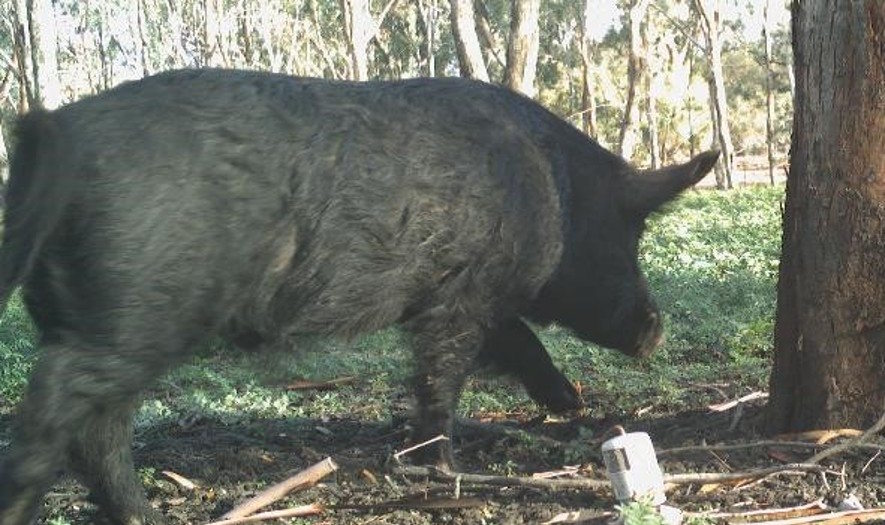 A feral pig caught on a camera trap. Photo by ARI.
Feral pigs as pests
Feral pigs are one of the most widespread pest animals in Australia causing significant environmental, agricultural and economic damage. Feral pigs decrease water quality, destroy vegetation, compete for food with native animals, eat eggs of birds and reptiles and predate on small mammals.
The impacts on the agricultural industry include the spread of diseases, predation on newborn lambs and damage to fencing and paddocks, costing up to $100 million each year.
Feral pigs have a patchy distribution throughout most of Victoria. There is potential for pigs to further spread and increase in abundance, in some cases aided by illegal release of animals.
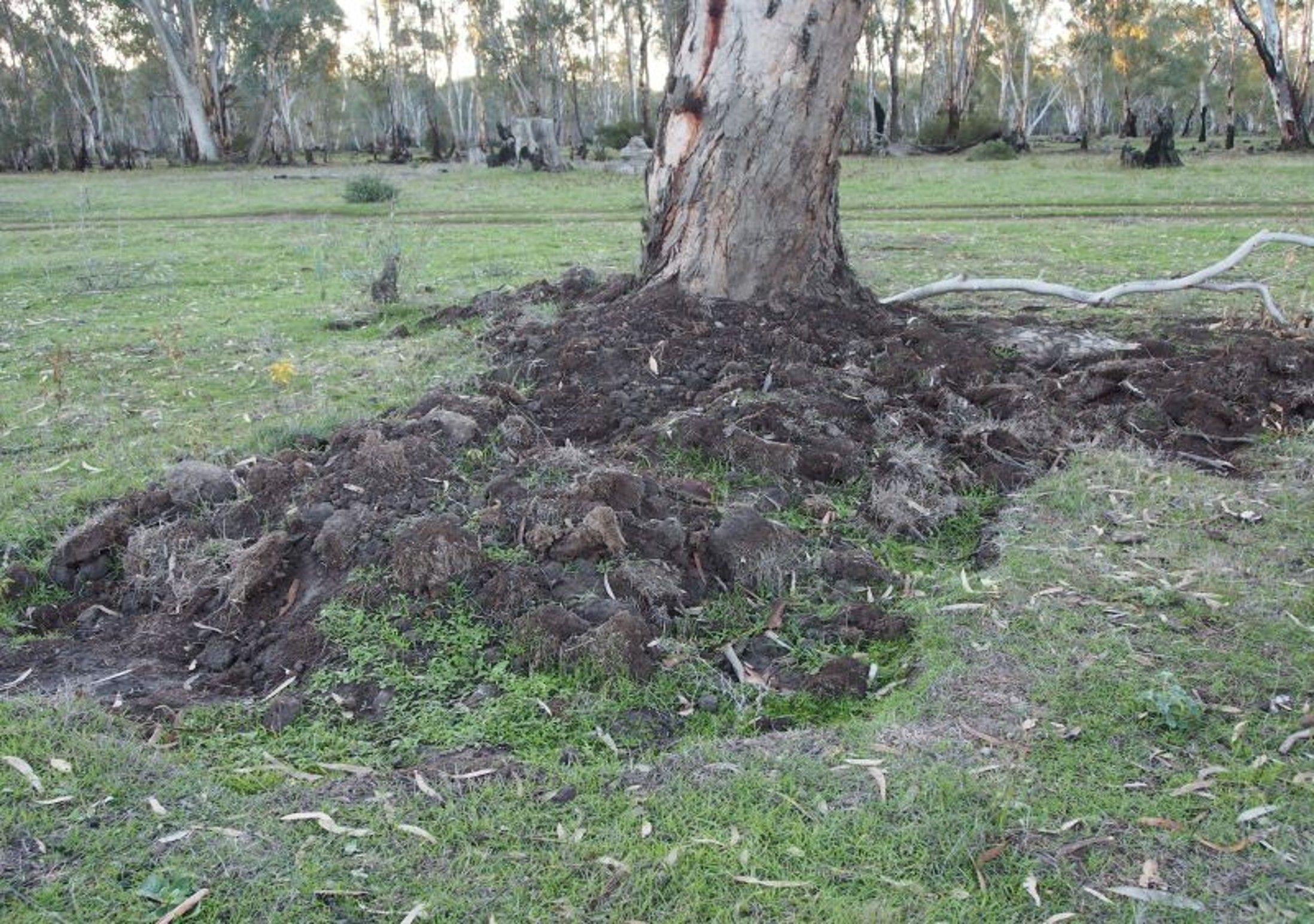 | 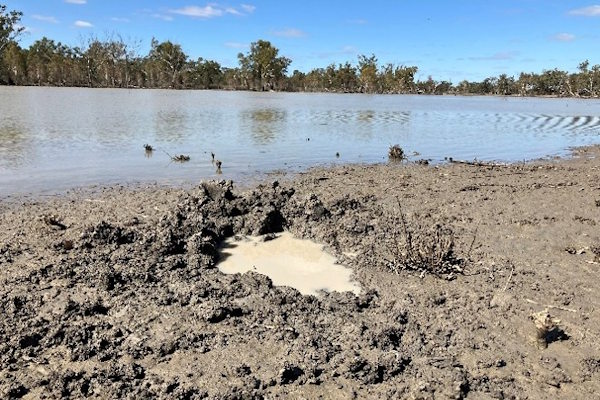 |
Damaged caused by feral pigs. Photos by ARI.
What are doing
ARI is delivering several projects to better understand the populations of feral pigs across Victoria and their risks to agriculture to inform risk management actions.
Population genetics of feral pigs
ARI is co-leading a project that is using genetic profiling to determine the population structure of feral pigs across south-east Australia. Genetics help us understand whether populations are self-contained or whether individuals are dispersing to create new ones.
This information will guide management actions to either contain populations that are spreading or eradicate discrete groups. Preliminary results suggest that:
- the feral pig population across south-east Australia is structured into approximately five groups between which gene flow is relatively low or limited
- some populations may have been formed by range expansion and hybridization of at least two separate clusters
- some populations show evidence of ongoing migration between locations.
In this on-going work, ARI scientists will attempt to validate the preliminary results by increasing sample size and coverage, combining the data with publicly available datasets from global pig breeds to determine the ancestry of south-east Australian feral pigs and estimating migration rates between population clusters.
This project was made possible by assistance from DEECA, Parks Victoria, Agriculture Victoria, CSIRO and NSW Dept. of Primary Industries.
This research was featured in ARI's Seminar, presented by Dr Lauren White.
Population size and livestock disease transmission
In 2025, ARI studied the potential impact of disease risk to livestock from feral pig populations. ARI delivered a statewide survey across 1,611 sites using Camera Trap Distance Sampling surveys.
Key findings:
- We estimated pig densities at 0–6 pigs/km², with a total population of 22,463 (90% CI: 14,300 – 33,599) on public land.
- The study confirmed that feral pigs are widespread but have a patchy distribution across Victoria.
- High-density “hotspots” pose an elevated disease risk for livestock, though these areas are geographically localised. Further risk modelling identified specific high- and moderate-risk farm locations.
- Disease simulations showed outbreaks could persist for over a year without control but could be effectively managed through rapid, high-intensity culling down to below 2 pigs/km² for minimising disease spread and improving outbreak containment.
This research was delivered in partnership with Agriculture Victoria’s Animal Health and Welfare Unit and public land managers across Victoria, New South Wales and South Australia.
Publications:
- ARI Technical Report 399 (2026). Risks of potential emergency animal disease transmission between Feral Pigs and farmed livestock. (PDF, 2.6 MB). (DOCX, 9.3 MB)
- ARI Report (2024). Abundance of Feral Pigs at Two Sites in East Gippsland Recovering from Bushfire. Unpublished report for DEECA.
ARI's research on wildlife disease risk in Victoria provides further insights about managing diseases in Victoria.
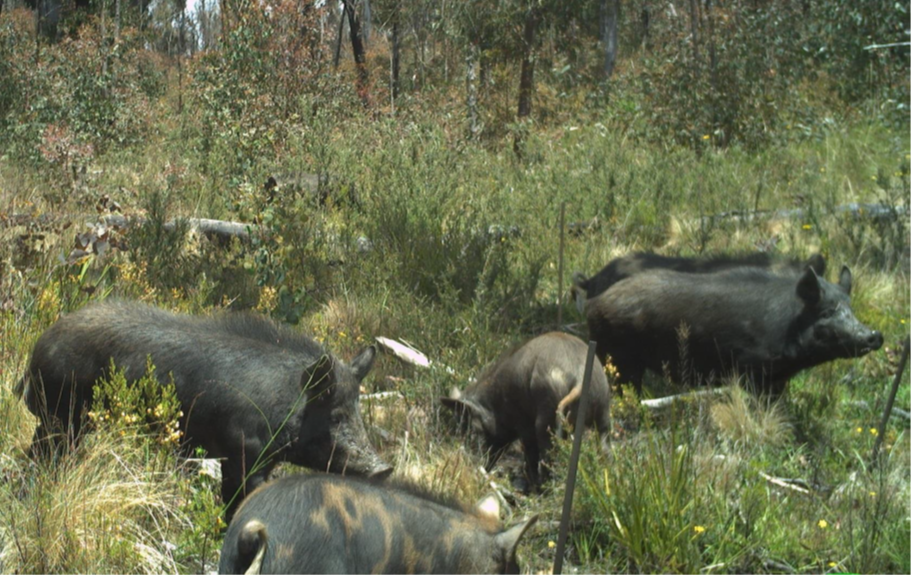
Feral pigs caught on a camera trap. Photo by DEECA
Research impact
This research is improving the effectiveness of feral pig control and strengthening livestock disease preparedness across south-east Australia. Genetic analyses have identified several relatively distinct feral pig populations, with limited movement between many groups. These findings help managers target control efforts more strategically, identifying populations suitable for eradication and areas where coordinated control is needed to prevent spread.
Statewide monitoring has also provided robust estimates of feral pig abundance and distribution across Victoria, identifying localised hotspots that present the highest risk for disease transmission to livestock.
These outcomes provide critical evidence to guide management investment, reduce biosecurity risks, improve disease outbreak preparedness, and support more efficient, landscape-scale feral pig management.
How you can help
We are looking for land managers and pest control teams to help us collect tissue and blood samples for genetic analysis.
For more information contact Luke Woodford, luke.woodford@deeca.vic.gov.au or research.ari@deeca.vic.gov.au
More Information
For more information on feral pigs see Agriculture Victoria’s PestSmart Connect website.
Page last updated: 28/08/26